Why Is My Toilet Running Constantly? Causes & Fixes
November 5, 2026

 8:00am – 6:00pm, Mon-Thur : 8:00am – 4:00pm, Fri-Sat: Sun-Closed
 Americanwood St, Las Vegas, NV 89130, United States
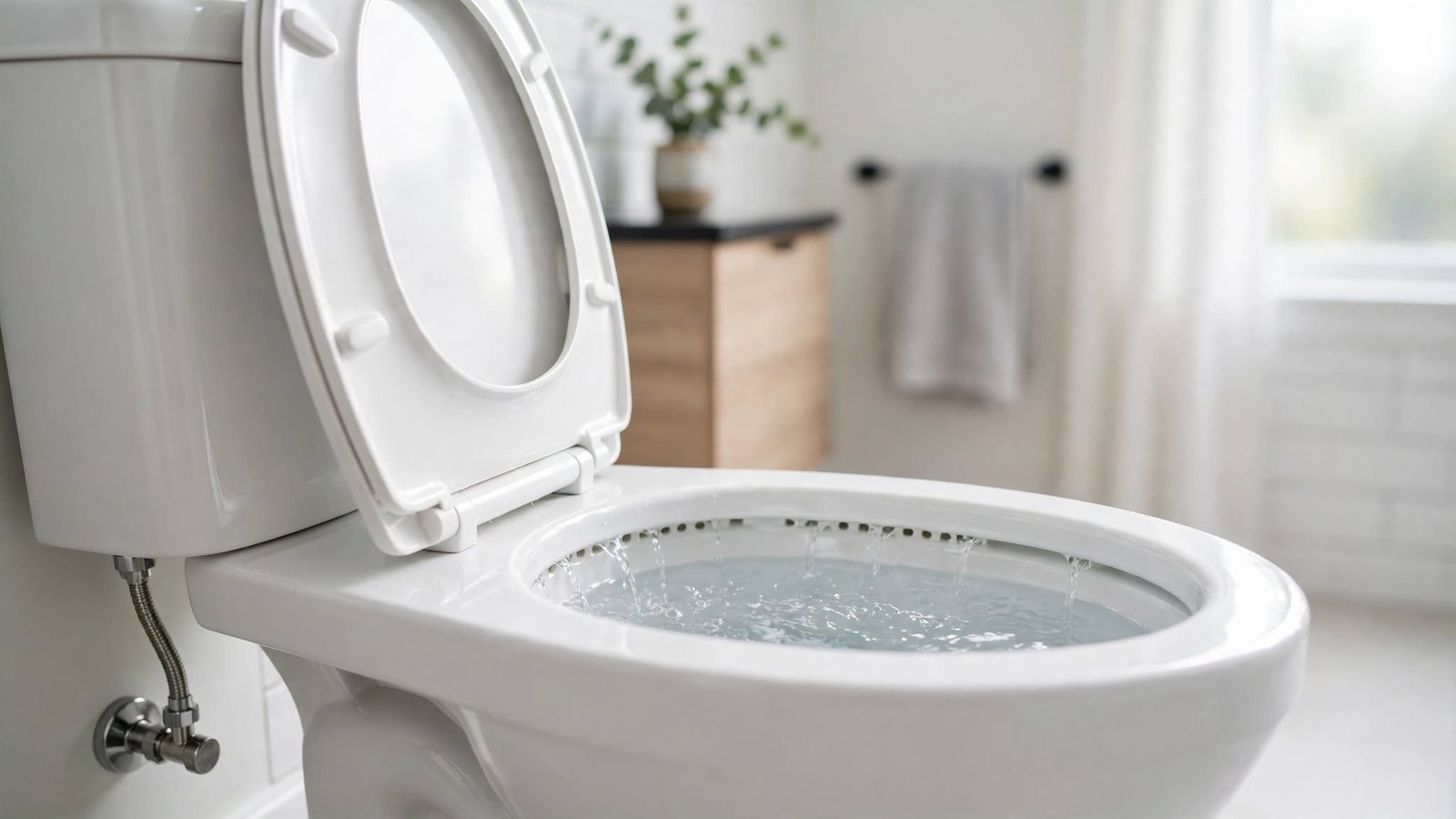
A toilet that won’t stop running is easy to ignore because it’s just a quiet trickle in the back of the bathroom. It’s also one of the most common ways a household wastes water without anyone noticing. The EPA’s WaterSense program identifies toilets as a leading source of household leaks, and a toilet that leaks silently can waste hundreds of gallons a day in some cases.
The good news is that a running toilet is usually one of the more fixable plumbing problems. Most causes come down to a handful of inexpensive parts inside the tank, and you can often identify the culprit in under 20 minutes. This guide explains how the system works, how to find the actual cause instead of guessing, which repairs are reasonable DIY projects, and when the problem points to something that needs a professional.
Knowing the basic parts makes every diagnosis easier. Take the tank lid off and you’ll see four main components:
A toilet runs constantly when one of two things happens: water is leaking out of the tank into the bowl (a sealing problem), or water keeps flowing in because the fill valve isn’t shutting off (a control problem). Nearly every running toilet falls into one of these two categories, and the symptoms differ enough to tell them apart.
The flapper is the most common culprit. Over time the rubber hardens, warps, or develops a slimy film, and it stops sealing against the flush valve opening. Water then seeps from the tank into the bowl, the tank level drops, and the fill valve kicks on to refill it. That’s why a leaking flapper often produces a toilet that turns itself on every several minutes (sometimes called a “phantom flush”).
Flapper life varies widely. Age, water chemistry, and in-tank cleaning products all play a role. Drop-in bleach or chlorine tablets are a well-known way to shorten flapper life because they degrade rubber faster than normal water exposure does.
The chain connecting the flush handle to the flapper needs a small amount of slack, about half an inch. If it’s too tight, it holds the flapper slightly open. If it’s too long, it can slip under the flapper and prevent a clean seal. This is the easiest fix on the list, and it’s worth checking before you buy any parts.
If the water level in the tank rises above the top of the overflow tube, water spills continuously down the tube and into the bowl. You’ll typically hear water running steadily with no gaps. The water level should sit about an inch below the top of the overflow tube, or at the fill line marked inside the tank if there is one. Most floats can be adjusted with a screw or a sliding clip.
Fill valves have internal seals and moving parts that wear out. A failing one may hiss continuously, refill slowly, or never fully shut off even when the float is positioned correctly. If you’ve confirmed the flapper seals well and the water level is correct but the toilet still runs or hisses, the fill valve is the likely cause.
The flapper seals against a ring called the flush valve seat. If that surface is pitted, corroded, or coated with mineral deposits, even a brand-new flapper won’t seal properly. In Las Vegas, where our water supply carries significant dissolved minerals (see the Southern Nevada Water Authority’s published water-quality data), mineral buildup on this seat is a real possibility. It’s one contributing cause among several, though. A running toilet with a worn flapper is far more often a simple age issue than a hard water issue. For more on how our water chemistry affects household hardware, see our article on hard water effects on faucets and plumbing fixtures.
Less common, but worth knowing: a cracked overflow tube lets water escape continuously, and a hairline crack in the tank itself can cause slow leaks. Cracks in porcelain generally mean replacement rather than repair.
You don’t need tools for most of this.
This test is reliable and distinguishes a sealing problem from a fill problem. If the bowl water stays clear but you still hear running, the issue is on the fill side.
If the water is at or above the top of the overflow tube, adjust the float. If the level is correct but the sound continues, look at the fill valve.
A steady hiss usually suggests the fill valve. Periodic refilling every few minutes usually points to a flapper leak. Constant trickling over the overflow tube points to a float height problem.
Toilet tank repairs are among the more approachable home plumbing tasks because the tank holds no pressurized hot water, involves no gas or electrical components, and the parts are standardized and inexpensive.
Reasonable DIY repairs:
A few cautions: Always close the toilet’s supply valve (the small valve on the wall or floor behind the toilet) before working inside the tank. Tighten supply line connections by hand plus a small turn only, since overtightening plastic fittings is a common way to cause a new leak. And match replacement parts to your toilet brand and model, because “universal” parts don’t always fit as promised.
A running toilet is often simple, but certain situations signal something beyond a quick part swap:
Contact Save More Handyman Services, If any of these apply, our toilet replacement services in Las Vegas can diagnose the underlying issue and handle the work.
For a running toilet, repair is almost always the right first move, since a flapper or fill valve costs little compared to a new toilet. Replacement starts to make sense when:
Replacement is also a good time to inspect the supply line, shutoff valve, and flooring condition beneath the old unit, since those problems are easier to catch while the toilet is out.
A constantly running toilet is usually a small mechanical problem with a clear diagnosis: a leaking flapper, a misadjusted float, or a tired fill valve. Spending 15 minutes on a dye test and a water-level check will usually point you to the right part. Most homeowners can handle those fixes. When the shutoff valve is stuck, the base is leaking, the porcelain is cracked, or repairs keep coming back, professional diagnosis saves time and prevents secondary water damage.


 Americanwood St, Las Vegas, NV 89130, United States
 savemorehm@gmail.com
Get a Free Estimate Today!
Call us for a cost estimate over the phone.
Copyright © 2026 Save More Handyman Services. All rights reserved