Signs of a Hidden Water Leak in Your Home
October 2, 2026

 8:00am – 6:00pm, Mon-Thur : 8:00am – 4:00pm, Fri-Sat: Sun-Closed
 Americanwood St, Las Vegas, NV 89130, United States
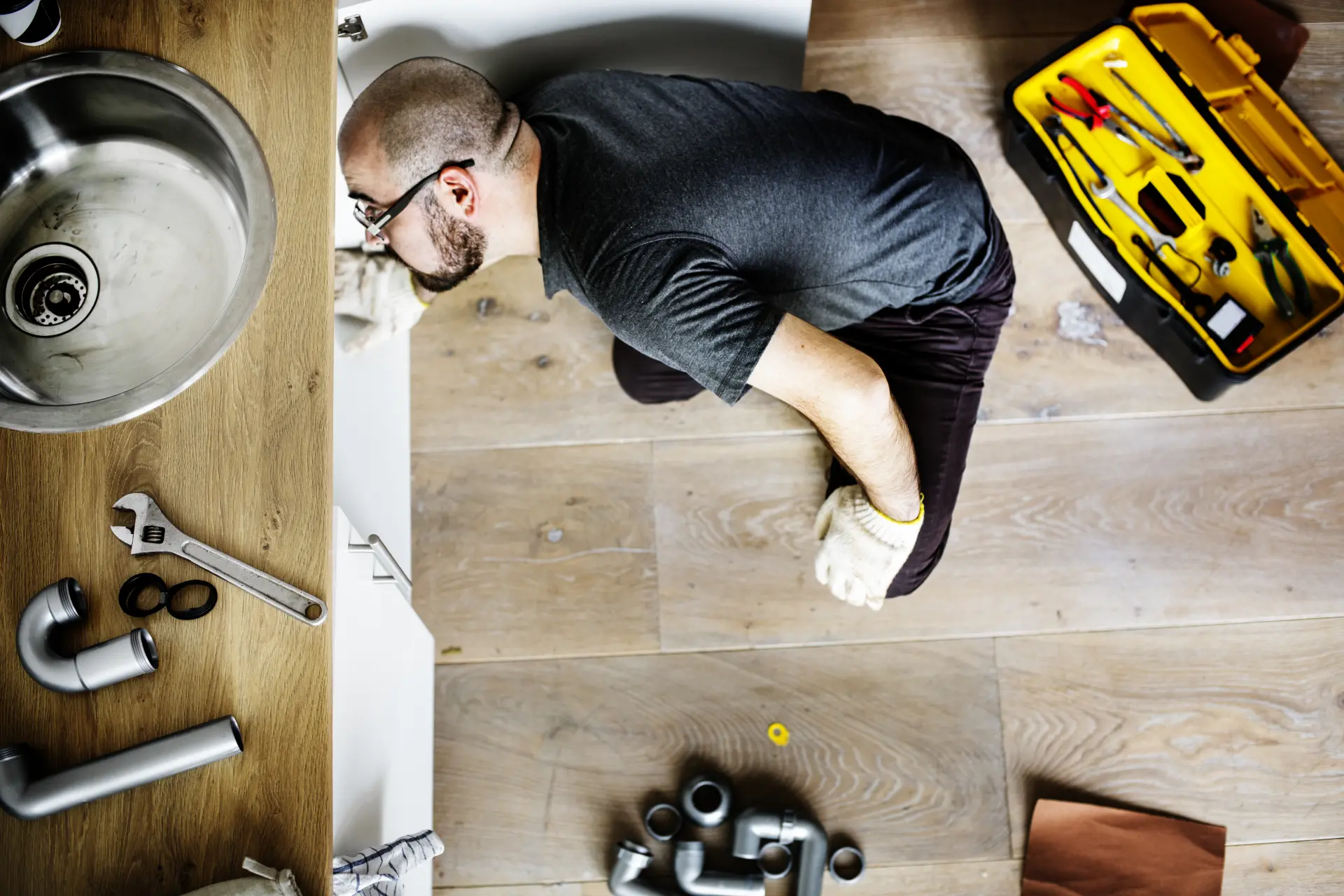
Not every plumbing leak creates an obvious puddle. Water can escape slowly behind drywall, beneath a sink, around a plumbing fixture, under flooring, or near concealed supply connections before a homeowner realizes there is a problem.
Sometimes the first warning is a stain on a ceiling. In other situations, it may be a musty odor, damaged paint, an unexpectedly high water bill, or a water meter that indicates usage when no water should be running.
Finding a hidden water leak early matters because prolonged moisture can damage drywall, cabinets, flooring, paint, and other building materials.
This guide explains common signs of hidden water leaks, where leaks can occur, how homeowners can investigate suspicious symptoms without opening walls, and when professional diagnosis is appropriate.
A hidden water leak is water escaping somewhere that isn’t immediately visible during normal use of the home.
For example, a dripping kitchen faucet is an obvious leak. A plumbing connection slowly releasing water inside a vanity cabinet, wall cavity, or ceiling can be much harder to detect.
Hidden leaks can occur around:
The location of visible moisture doesn’t always identify the exact source because water can travel along building materials before appearing somewhere else.
A new water stain is one of the most recognizable signs that moisture is reaching an area where it doesn’t belong.
Staining may appear yellowish, brown, discolored, or simply darker than the surrounding material.
A ceiling stain can have multiple possible sources.
Depending on what’s located above it, possibilities include:
A stain underneath an upstairs bathroom, for example, doesn’t necessarily tell you which fixture is responsible.
The plumbing source needs to be identified before the ceiling itself is permanently repaired.
Painting may hide the discoloration temporarily, but it doesn’t address active moisture.
If the leak continues, staining and material damage can return.
The correct sequence is generally:
Find the moisture source → correct the source → allow/evaluate affected materials → repair damaged drywall or finishes.
A sudden or unexplained increase in water usage can be a clue that water is being consumed somewhere in the property.
This doesn’t automatically prove there is a hidden leak. Household water consumption changes for many reasons, including additional occupants, irrigation, seasonal use, or changes in daily habits.
But if your routine hasn’t changed and water use rises unexpectedly, it can be worth investigating.
Potential sources include:
A toilet that periodically refills without being flushed can be particularly easy to overlook because the water may flow directly into the bowl rather than onto the floor.
Your home’s water meter can sometimes provide useful evidence when you’re trying to determine whether water is flowing unexpectedly.
First, make sure known water-using fixtures and appliances are not operating.
That can include:
Then observe the water meter according to your local utility’s instructions.
If it continues registering usage when no water should be in use, further investigation may be warranted.
This test can indicate that water is moving through the system, but it doesn’t necessarily tell you where the problem is located.
If you suspect a plumbing leak, explore our Las Vegas plumbing services for available repair options.
Paint and other finishes can react visibly when moisture reaches the surface underneath them.
Possible warning signs include:
No.
Moisture can originate from several sources, and paint can fail for reasons unrelated to plumbing.
The location provides useful context.
Bubbling paint directly behind a bathroom fixture, underneath plumbing, or near a known water line may justify investigating a plumbing source. But condensation, exterior moisture intrusion, or other building issues can produce similar symptoms.
Diagnosis should come before repair.
Drywall is vulnerable to prolonged moisture.
When water reaches sheetrock, you may notice changes such as:
That depends on the amount of water involved, duration of exposure, extent of damage, contamination category, and condition of the material.
Minor cosmetic damage after a corrected moisture issue may sometimes be repairable. Saturated, deteriorated, contaminated, or otherwise compromised drywall can require removal and replacement.
The plumbing problem should always be addressed first.
Persistent musty odors can indicate excess moisture even when you cannot see visible water.
Walls, cabinets, flooring, and other enclosed spaces can retain moisture after a slow leak.
An odor doesn’t identify the source by itself.
Potential causes can include:
If the odor appears alongside staining, dampness, peeling paint, or plumbing problems, the combination deserves attention.
Persistent dampness can also create conditions favorable to microbial growth, so ongoing moisture shouldn’t simply be covered or deodorized.
One of the easiest places for homeowners to check for slow leaks is underneath kitchen and bathroom sinks.
Because these spaces are usually enclosed, a small plumbing leak may continue for some time before water reaches a visible floor.
Possible sources include:
Look for dampness, staining, swollen cabinet material, corrosion, or water droplets.
For kitchen fixture problems, our kitchen faucet repair and installation service covers applicable faucet work.
Water appearing near a toilet doesn’t always mean the toilet itself has cracked.
Several potential sources exist.
Possibilities include:
Identifying where the water originates is important because each cause requires a different solution.
A properly installed toilet should remain stable.
Movement can indicate mounting or underlying problems and may compromise the seal between the toilet and drain.
Repeated moisture around a toilet can eventually affect flooring or nearby materials.
If your fixture is aging, damaged, or no longer worth repairing, see our toilet replacement service in Las Vegas.
Water around a water heater deserves prompt investigation because several different components or nearby connections could be responsible.
Possible sources can include:
Not necessarily.
Finding water near a water heater doesn’t automatically prove that the tank itself is leaking.
The location where moisture first appears can help determine whether the problem involves the heater, a connection, or another nearby component.
Water sounds when nobody is using a fixture can be another warning sign.
For example, you might hear:
Before assuming there is a concealed pipe leak, check obvious water-using fixtures.
A toilet that has a deteriorated flapper or fill-valve problem can operate intermittently even when nobody has intentionally used it.
If you cannot identify the source, further plumbing diagnosis may be appropriate.
Changes in water pressure can have several causes, and a leak is only one possibility.
Others can include:
The pattern of the pressure change can provide useful information.
If only one faucet has reduced flow, inspect that fixture and its aerator before assuming there is a concealed leak.
In Las Vegas, mineral accumulation can restrict small openings in faucets and showerheads. If pressure changes are widespread or accompanied by unexplained moisture or water usage, a broader plumbing evaluation may be appropriate.
Slow leaks can cause visible changes to nearby building materials.
You may see:
These symptoms are particularly relevant beneath sinks, around toilets, next to tubs or showers, and near appliances connected to water.
Replacing damaged material without correcting the moisture source first can allow the same damage to return.
A useful way to investigate a possible leak is to think about where water enters, moves through, and exits fixtures within the home.
Check supply lines, valves, faucets, drains, and visible plumbing connections.
Inspect the supply connection, tank area, fixture base, and surrounding floor for signs of moisture.
Water supply and drain components may be concealed behind finished surfaces, making some leaks difficult to observe directly.
Inspect visible plumbing connections and surrounding areas for unexplained water.
Concealed plumbing can sometimes leak without immediately producing visible water. Staining or material changes may be the first indication.
Refrigerators, washing machines, dishwashers, and similar equipment can have water connections that deserve consideration when unexplained moisture appears nearby.
Hard water can contribute to mineral accumulation in fixtures and certain plumbing components, but it should not automatically be identified as the cause of a concealed leak.
Leaks can arise from many factors, including:
Las Vegas hard-water conditions are relevant to plumbing maintenance, but proper diagnosis matters more than attributing every failure to mineral content.
For more information, read how hard water affects plumbing in Las Vegas homes.
Persistent moisture can create conditions that support microbial growth.
However, a homeowner shouldn’t assume that every stain or musty odor is mold based on appearance alone.
The immediate priority is identifying and stopping the source of unwanted moisture. Depending on the amount of water, duration, affected materials, and presence of suspected microbial growth, additional professional assessment or remediation may be appropriate.
Simply painting over a damp or affected surface does not correct the moisture problem.
You can perform several non-destructive observations before assuming a wall needs to be opened.
Inspect accessible:
Review your recent water consumption for unexplained changes.
With all known water use stopped, follow your utility’s procedure for checking whether the meter still indicates consumption.
Observe walls, ceilings, cabinets, and floors near plumbing.
Consider whether the symptom becomes more noticeable:
The timing can sometimes help connect the moisture to a particular fixture or system.
A stain doesn’t necessarily mean the pipe immediately behind that exact spot is leaking.
Because water can travel, opening the wrong location can cause unnecessary damage without finding the source.
Your response should depend on the severity and location of the problem.
If water is actively escaping and it can be done safely, shutting off the appropriate fixture or water supply may reduce further damage.
Knowing the location of your home’s shutoff valves before an emergency is useful.
Where safe, keep water away from belongings and avoid contact with electrical equipment or energized areas.
A wet wall is evidence of moisture, but it is not necessarily the source.
Find where the water originates before permanently repairing damaged materials.
The leak itself needs to be resolved before reconstruction or cosmetic repair begins.
For relevant household plumbing work, review our plumbing services in Las Vegas.
Once the source is stopped, affected drywall, cabinets, flooring, insulation, or other materials should be evaluated based on their condition and the nature of the water exposure.
For appropriate wall repairs after the moisture problem has been corrected, see our sheetrock repair services.
This is an important order of operations.
Imagine a pipe or fixture behind a bathroom wall is slowly leaking.
Repairing the visible drywall first creates this cycle:
Leak continues → new drywall gets wet → staining or deterioration returns → wall needs repair again.
The better sequence is:
Leak detection → plumbing repair → moisture/damage assessment → drying/remediation as appropriate → drywall repair → texture and finish restoration.
This relationship is why plumbing and sheetrock repairs often overlap after concealed water leaks.
Some leaks require faster attention than others.
Seek prompt qualified assistance when there is:
If water is near electricity, avoid entering or touching an unsafe area. Electrical, gas, sewage, structural, and other specialized hazards require appropriately qualified professionals.
You cannot prevent every leak, but routine observation can make problems easier to catch.
Periodically:
The goal isn’t to constantly search your home for problems. It is simply to recognize changes that may indicate water is escaping where it shouldn’t.
Possible signs include unexplained water stains, damp drywall, musty odors, damaged cabinets, unexpected water usage, sounds of running water, and a water meter indicating use when fixtures are off. None of these signs independently proves there is a concealed leak, so the source still needs to be identified.
Yes. Plumbing can run through wall and ceiling cavities, allowing a leak to remain concealed until moisture affects visible building materials. Common warning signs include staining, softness, bubbling paint, or unexplained dampness.
Not necessarily. Water use can increase because of irrigation, additional household occupants, seasonal changes, or changes in daily habits. An unexplained increase is a reason to investigate, not proof of a leak.
Yes. A toilet that allows water to continually or intermittently move from the tank into the bowl can consume water even without an obvious puddle. If an aging toilet is repeatedly causing problems, see our Las Vegas toilet replacement service.
Water heater leaks can sometimes be obvious, but smaller leaks or problems around connections may initially be less noticeable. Any unexplained moisture around a water heater deserves investigation. Learn more about water heater repair and installation in Las Vegas.
Fix the water source first.
The affected area may also need appropriate drying, evaluation, or remediation before permanent reconstruction. Once the underlying moisture problem is resolved, damaged wall material can be addressed.
Hidden water leaks can be difficult to identify because the first visible symptom may appear some distance from the source. Water stains, damaged drywall, damp cabinets, unusual water usage, running-water sounds, and moisture around plumbing fixtures are all signs worth investigating.
The most important principle is to identify and correct the water source before repairing cosmetic damage. Save More Handyman Services provides plumbing-related and home repair services in Las Vegas, contact us for estimates.

 Americanwood St, Las Vegas, NV 89130, United States
 savemorehm@gmail.com
Get a Free Estimate Today!
Call us for a cost estimate over the phone.
Copyright © 2026 Save More Handyman Services. All rights reserved