5 Signs Your Toilet Needs to Be Replaced
November 6, 2026

 8:00am – 6:00pm, Mon-Thur : 8:00am – 4:00pm, Fri-Sat: Sun-Closed
 Americanwood St, Las Vegas, NV 89130, United States
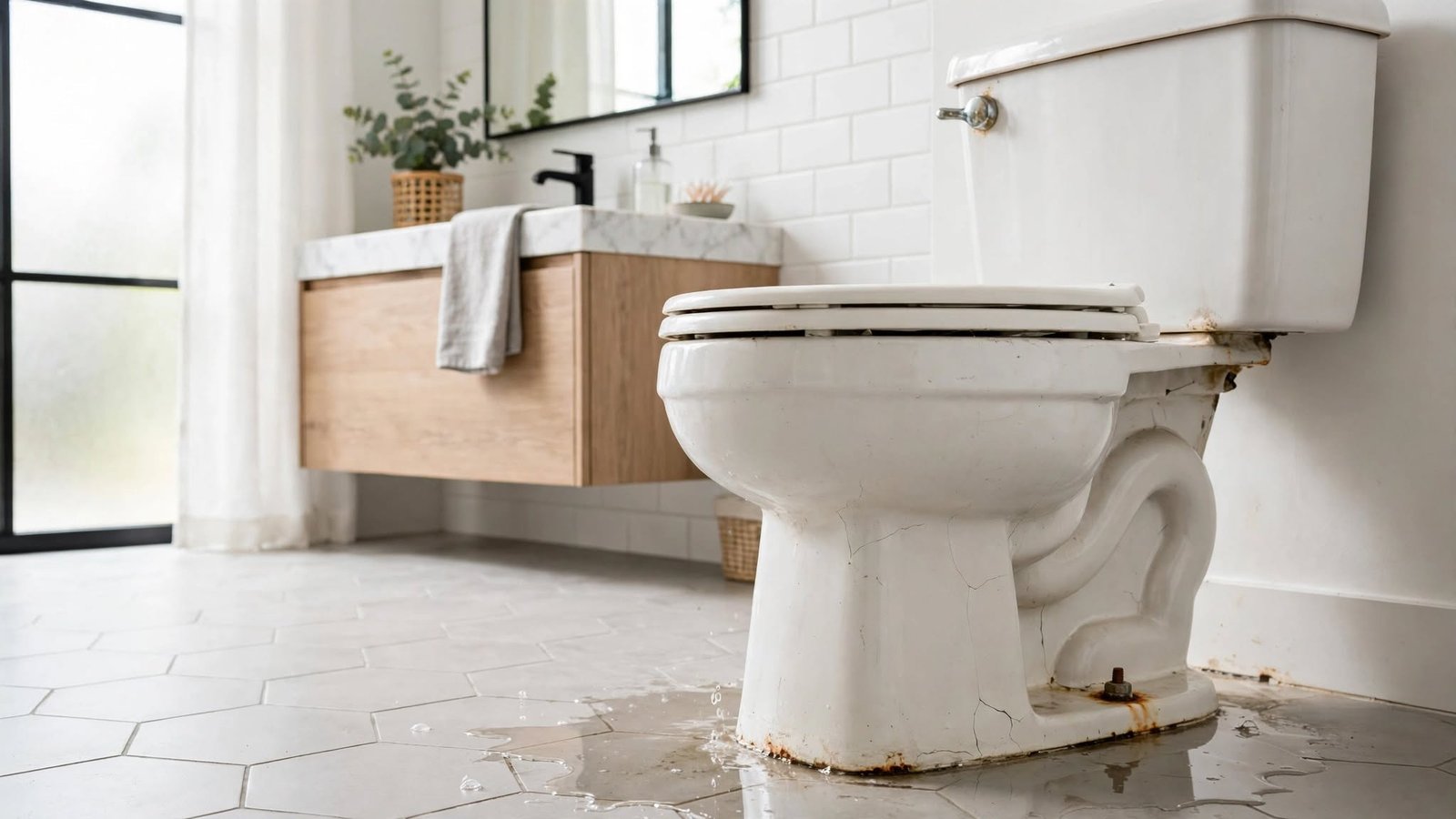
Most toilet problems are repair problems. A worn flapper, a tired fill valve, or a loose bolt costs little to fix, and a well-made toilet can last decades. But some problems can’t be repaired, and others can be repaired so often that replacement becomes the cheaper choice.
This guide helps you tell the difference. It covers the signs that point to replacement, the problems that only look like replacement problems, what to consider when choosing a new toilet, and what the replacement process involves. If your toilet is simply running, start with our guide to why a toilet runs constantly, since that is usually a quick, inexpensive repair.
Structural cracks are the clearest reason to replace a toilet. A crack in the tank can leak. A crack in the bowl, especially below the waterline, can leak slowly onto the floor and can worsen without warning. Epoxy and sealants are not reliable fixes for a pressurized, constantly wet fixture.
Not every line in the glaze is a crack. Crazing, a web of hairline marks in the surface glaze, is common in older toilets and is generally cosmetic. A true crack is usually visible on both the surface and the edge, may feel like a ridge, and is often accompanied by moisture or a falling water level. If you’re unsure which you have, check whether water collects along the line or whether the tank level drops without a leak elsewhere.
One flapper replacement is maintenance. A flapper, then a fill valve, then a flush valve, then a leaking tank bolt, all within a couple of years, suggests an aging fixture whose components are wearing out together. Once repair costs approach the price of a new toilet, replacing it usually makes more sense. This is the same logic we describe in our guide to water heater repair vs. replacement.
A toilet that clogs regularly or flushes weakly despite a clean bowl and correct water level may have a poorly designed or partially obstructed internal trap, which a plunger or auger won’t fix. Many older low-flow toilets from the early 1990s were notoriously poor performers. Their designs were rushed to meet new water limits before the technology matured.
Before blaming the toilet, check whether other fixtures drain slowly. If they do, the problem is likely in the drain line or venting, and a new toilet won’t help.
Federal standards introduced in 1994 limit new toilets to 1.6 gallons per flush, while many pre-1994 models use 3.5 gallons or more. Current WaterSense-labeled models use 1.28 gallons or less per flush. Replacing an older toilet with a modern one can noticeably reduce water use, particularly in a household with several people. If you don’t know your toilet’s age, check the manufacture date stamped inside the tank (often on the back wall under the lid) and the gallons-per-flush marking.
Over many years, the glaze inside a bowl can wear and become rough, which makes stains and buildup harder to clean. Las Vegas homeowners often notice mineral staining first, but that alone isn’t a reason to replace a toilet. Stains and scale from mineral-rich water can usually be removed with appropriate cleaners, and scaled rim jets can often be cleared. A worn, pitted surface that no longer cleans well is a different matter, and it can reasonably justify replacement.
Some symptoms send homeowners shopping for a new toilet when a repair would solve the issue.
The rough-in is the distance from the finished wall (not the baseboard) to the center of the floor flange bolts. 12 inches is the most common, but 10-inch and 14-inch rough-ins exist. A toilet that doesn’t match your rough-in won’t fit properly, so measure before you buy.
Elongated bowls are about two inches longer than round ones and are generally more comfortable, but they need more space. Standard-height toilets have a seat about 15 inches off the floor, while “comfort height” models sit closer to 17 to 19 inches, which many people find easier to use. Measure available clearance in small bathrooms and powder rooms before choosing.
Water efficiency and flushing performance are not the same thing. A toilet can use very little water and still clog regularly. Look for independent performance ratings such as MaP (Maximum Performance) test results, which measure how much waste a toilet can clear in one flush. Higher scores generally mean fewer clogs.
Understanding the process helps you judge whether it’s a project you want to tackle and what a professional should be doing.
Replacement is the best opportunity to evaluate things that are normally hidden:
Replacing a toilet is within reach for many handy homeowners, but the risks are real: heavy lifting, breakable porcelain, and hidden problems that only show up once the old toilet is removed.
Professional help is the better choice when:
If one or more of these applies, our toilet repair and replacement services in Las Vegas cover removal, flange and valve evaluation, installation, and testing.
Replace a toilet when it’s cracked, leaking from the porcelain itself, wasting significant water, performing poorly despite a clean line, or accumulating repairs. Repair it when the issue is a worn flapper, a loose connection, a failed wax ring, or a scaled rim jet. If you’re not sure which category you’re in, an inspection that includes the flange, shutoff valve, and surrounding floor will usually answer the question. Contact Save More Handyman Services for toilet replacement tasks.


 Americanwood St, Las Vegas, NV 89130, United States
 savemorehm@gmail.com
Get a Free Estimate Today!
Call us for a cost estimate over the phone.
Copyright © 2026 Save More Handyman Services. All rights reserved