Why Is My Water Pressure Suddenly Low? Causes & Fixes
October 7, 2026

 8:00am – 6:00pm, Mon-Thur : 8:00am – 4:00pm, Fri-Sat: Sun-Closed
 Americanwood St, Las Vegas, NV 89130, United States
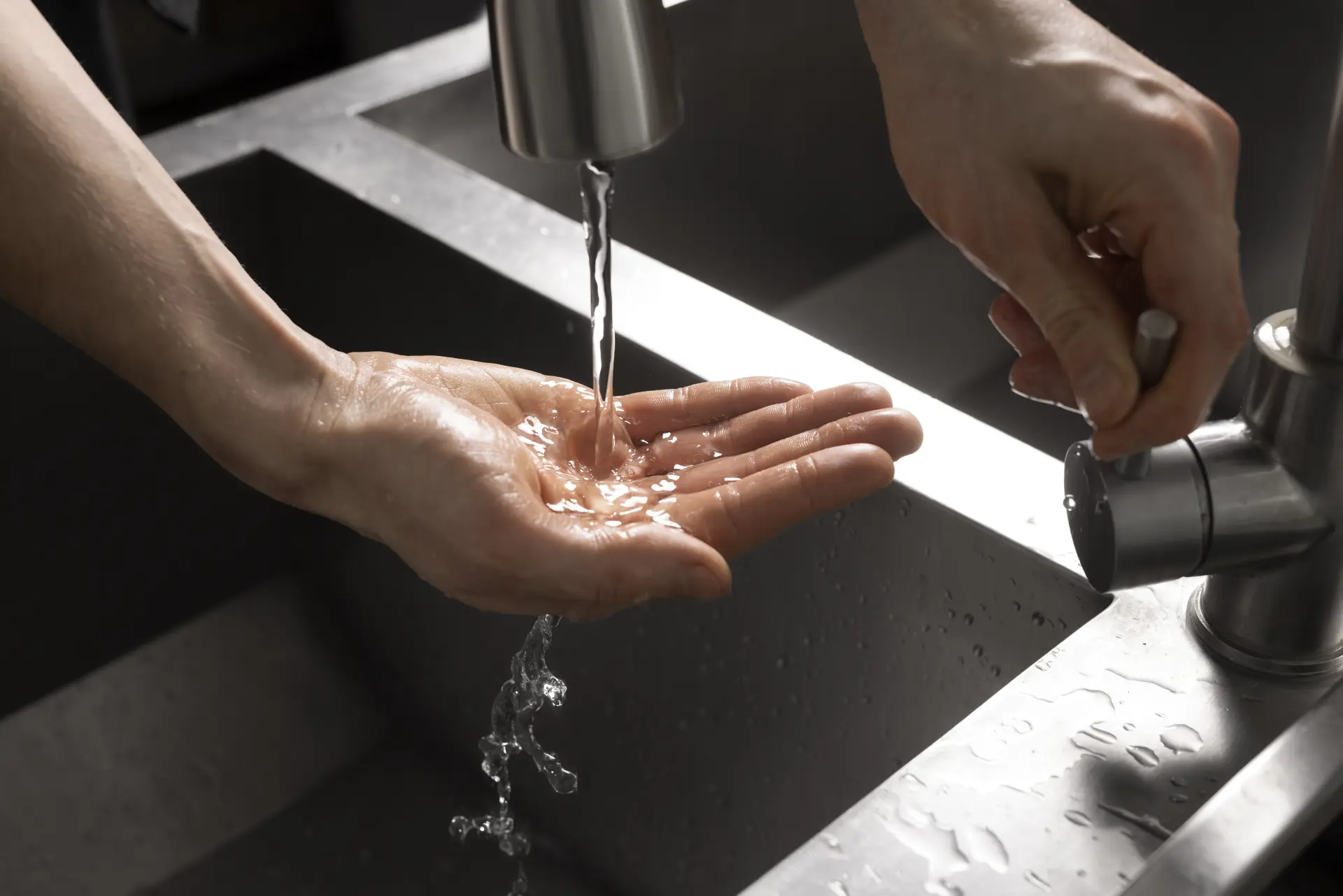
You turn on the kitchen faucet and the water barely flows. The shower suddenly feels weaker than usual. Or perhaps every faucet in the house seems to have lost pressure at the same time.
Low water pressure can be frustrating, but the location and pattern of the problem often provide clues about its cause. Weak flow from one faucet can indicate a fixture-specific issue, while low pressure throughout the house can point toward a broader plumbing or water-supply problem.
For Las Vegas homeowners, mineral buildup associated with hard water is another factor worth considering, particularly when flow gradually decreases through faucet aerators and showerheads.
Below, we’ll explain common causes of low water pressure, how to narrow down the problem, and when it makes sense to have the plumbing evaluated.
If low pressure is occurring alongside leaks or other plumbing problems, explore our plumbing services in Las Vegas.
Water pressure is the force that moves water through your home’s plumbing system. When you open a faucet or shower valve, pressure in the plumbing system allows water to travel through the fixture.
However, what homeowners describe as “low water pressure” isn’t always actually a pressure problem. Sometimes the problem is restricted flow.
Water pressure and water flow are related but different concepts.
Pressure describes the force pushing water through the plumbing system. Flow describes the amount of water passing through a fixture over a period of time.
For example, mineral buildup inside a kitchen faucet aerator can restrict the amount of water coming out of that particular faucet even though the home’s overall water pressure remains normal.
This distinction can help avoid diagnosing a whole-house plumbing problem when the issue is actually isolated to one fixture.
Before attempting any repair, test multiple fixtures.
Check:
You are looking for a pattern.
If only one faucet is affected, the problem is more likely to involve that particular fixture, aerator, supply connection, or valve.
If several fixtures in one bathroom or area are affected, there may be an issue associated with that portion of the plumbing system.
If cold-water flow seems normal but hot-water flow is weak, the problem may involve the hot-water side of the system.
If both hot and cold water suddenly become weak at multiple fixtures, a broader plumbing or supply issue becomes more likely.
This process of elimination is one of the most useful steps in diagnosing low water pressure.
There isn’t one universal cause.
Common possibilities include:
The easiest way to narrow down the possibilities is to determine exactly where the low pressure occurs.
When only one sink has weak water flow, the aerator is a logical place to investigate.
The aerator is the small component attached to the end of many faucet spouts. It mixes air into the water stream and controls the way water exits the faucet.
Because its openings are small, debris and mineral deposits can restrict them.
You may notice:
If every other fixture has normal flow, this is much more likely to be a localized fixture problem than a whole-house pressure failure.
Hard water contains dissolved minerals such as calcium and magnesium. As water evaporates, some mineral material can remain behind as scale. Over time, this buildup may restrict small openings in an aerator.
A shower with weak flow doesn’t necessarily mean the entire home’s pressure has dropped.
Showerheads contain numerous small openings that can gradually become restricted by mineral deposits.
Look for:
This is another situation where the difference between flow and pressure matters.
If the bathroom sink has strong flow but the shower is weak, investigate the shower fixture before assuming there’s a larger plumbing problem.
Valves control water movement through different sections of a home’s plumbing.
If a valve isn’t completely open, it may restrict the available flow.
This can occur after plumbing maintenance or other work if a valve was operated and not returned to its appropriate position.
Depending on the home’s plumbing configuration, relevant valves can include:
Avoid forcing a valve that is stuck, damaged, corroded, or unfamiliar. An older valve can sometimes begin leaking when disturbed.
If you’re uncertain about a valve’s purpose or condition, having it professionally evaluated can be safer than forcing it.
A leak can sometimes contribute to pressure or flow changes, depending on its location and severity.
Leaks can occur around visible plumbing connections or remain hidden behind walls, ceilings, cabinets, or other finished surfaces.
Look for other symptoms such as:
Low pressure alone doesn’t prove that a leak exists.
But when pressure changes occur alongside unexplained moisture or water usage, a leak deserves consideration.
Read our detailed guide to the signs of a hidden water leak in your home for additional troubleshooting information.
Because Las Vegas has hard water, homeowners often wonder whether mineral accumulation can cause low pressure.
The answer requires some distinction.
Mineral deposits can restrict flow through components such as:
That can make water coming from a fixture appear weaker.
However, hard water shouldn’t automatically be blamed when pressure decreases across the entire home.
White or chalky residue around fixtures is commonly associated with minerals remaining after water evaporates.
You might see it around:
Remember that filtration and water softening aren’t necessarily the same process. The appropriate treatment depends on the water-quality issue you’re trying to address.
Sometimes the restriction is inside the fixture rather than at the aerator.
Faucets contain components that control the movement and mixing of hot and cold water.
Depending on the design, problems may involve components such as:
A faucet that has both weak flow and other symptoms—such as leaking, difficulty operating, or inconsistent output—may require more than simply cleaning the aerator.
If cold water flows normally but hot water is weak at multiple fixtures, that’s a particularly useful diagnostic clue.
It suggests looking at the hot-water side rather than assuming the entire property’s water pressure has changed.
Possible causes vary according to the plumbing system and water-heating equipment.
Compare hot and cold water at:
If hot-water flow is weak everywhere while cold water is normal, professional evaluation may be appropriate.
Potentially.
Water heaters and their connected plumbing can experience sediment, valve, connection, or equipment-related problems.
Do not attempt to disassemble water-heating equipment without appropriate knowledge. Water heaters involve hot water under pressure and may also involve electricity or gas.
Some homes have a pressure-reducing or pressure-regulating valve associated with the incoming water supply.
Its purpose is to control downstream pressure.
If a regulating component isn’t functioning correctly, it may contribute to pressure that is too low, too high, or inconsistent.
Possible clues include:
These symptoms don’t prove that a regulator has failed. They simply indicate that the problem may extend beyond an individual faucet or showerhead.
Correct diagnosis is preferable to replacing components based on symptoms alone.
Reduced flow can sometimes involve restrictions within the plumbing itself.
The likelihood and causes depend on factors such as:
A restriction within a supply line can behave differently from a clogged faucet aerator.
When many fixtures are affected—or the problem cannot be traced to individual fixtures—the plumbing system may need a broader evaluation.
Not every water-pressure problem starts inside your house.
Temporary changes can sometimes be associated with utility work, maintenance, supply conditions, or other external factors.
If pressure drops suddenly throughout your property, determining whether nearby homes are experiencing the same issue can provide useful context.
You can also check information from your local water provider when appropriate.
If multiple properties are affected at the same time, the problem may not originate with your individual plumbing.
A sudden change deserves different consideration from flow that has gradually declined over months.
Sudden low pressure can potentially involve:
Gradual decline is more consistent with issues that develop over time, such as fixture buildup or wear, though this isn’t an absolute rule.
The timing is therefore valuable diagnostic information.
When one faucet is affected and everything else works normally, begin with the fixture rather than the whole plumbing system.
Consider:
This process helps distinguish a faucet issue from a larger plumbing problem.
If faucets throughout the home have normal flow but one shower is weak, the problem is likely more localized.
Potential causes can include:
Start with the observation that only one fixture is affected.
That can save considerable time compared with treating it as a whole-house pressure problem.
This pattern points attention toward the hot-water side of the plumbing. Test several fixtures to confirm that the problem isn’t limited to one faucet. If hot-water flow is weak throughout the property, consider having the water-heating system and connected plumbing evaluated.
Any component installed in a water supply can potentially affect flow if it is improperly sized, installed incorrectly, clogged, or due for maintenance.
With filtration systems, performance depends on factors including:
A noticeable pressure change after installing or servicing water-treatment equipment should be evaluated within that context.
Instead of immediately replacing plumbing components, diagnose the pattern first.
Determine whether the issue affects one fixture, one area, or the entire property.
If only the hot side is affected, that significantly changes the troubleshooting path.
Inspect faucet aerators and showerheads for visible scale or restricted openings.
Look beneath sinks, near toilets, around the water heater, and at visible plumbing connections.
Also watch for wall or ceiling stains.
Ask whether the change was sudden or gradual and whether any plumbing work occurred immediately before it.
If every fixture suddenly has weak pressure, check whether there are known water-supply issues in your area.
If the cause isn’t obvious—or if low pressure occurs with leaking, water damage, or other significant symptoms—professional diagnosis can prevent unnecessary repairs.
Low pressure doesn’t always represent an emergency, but some combinations of symptoms need faster attention.
Seek appropriate help when low pressure occurs with:
A sudden pressure change combined with signs of a hidden leak should not simply be attributed to hard water.
For more troubleshooting information, read our guide to hidden water leak warning signs.
Some causes of low flow develop gradually and can be identified through ordinary maintenance.
Pay attention when a faucet’s stream becomes uneven or gradually weaker.
Visible mineral buildup can obstruct individual nozzles.
Don’t allow visible plumbing leaks to continue simply because they appear small.
Changes in hot-water flow, temperature, noises, or leakage can indicate a developing issue.
One weak faucet and an entire house losing pressure are very different symptoms. Recognizing that distinction helps you respond appropriately.
Possible causes include valve changes, plumbing leaks, fixture problems, pressure-control issues, or changes in the external water supply. If the entire home is affected suddenly, investigate the broader system rather than just one faucet.
A restricted aerator, fixture problem, supply connection, or individual valve can affect one faucet while the rest of the home operates normally.
In Las Vegas, mineral scale on an aerator is also worth checking.
Hard-water minerals can accumulate around faucet aerators, showerhead openings, and certain plumbing components, potentially restricting flow.
But hard water isn’t the only possible cause of low pressure. Read our complete guide to hard water and Las Vegas plumbing.
If the difference occurs at multiple fixtures, it can indicate an issue involving the hot-water side of the plumbing or water-heating system.
If hot-water performance has also changed, consider having the water heater and related plumbing evaluated.
A sufficiently significant leak can affect plumbing performance, although low pressure alone doesn’t prove that a leak exists.
Look for additional symptoms including unexpected moisture, water stains, sounds of running water, or unexplained water consumption.
If only the shower is affected, possible causes include a restricted showerhead, mineral buildup, or problems with the shower fixture or valve.
If every fixture is weak, investigate the broader plumbing or water supply.
Professional evaluation makes sense when low pressure is widespread, appears suddenly without explanation, is accompanied by leakage or water damage, affects the hot-water system, or can’t be traced to an individual fixture.


 Americanwood St, Las Vegas, NV 89130, United States
 savemorehm@gmail.com
Get a Free Estimate Today!
Call us for a cost estimate over the phone.
Copyright © 2026 Save More Handyman Services. All rights reserved