How Long Do Water Heaters Last in Las Vegas? Lifespan Guide
October 20, 2026

 8:00am – 6:00pm, Mon-Thur : 8:00am – 4:00pm, Fri-Sat: Sun-Closed
 Americanwood St, Las Vegas, NV 89130, United States
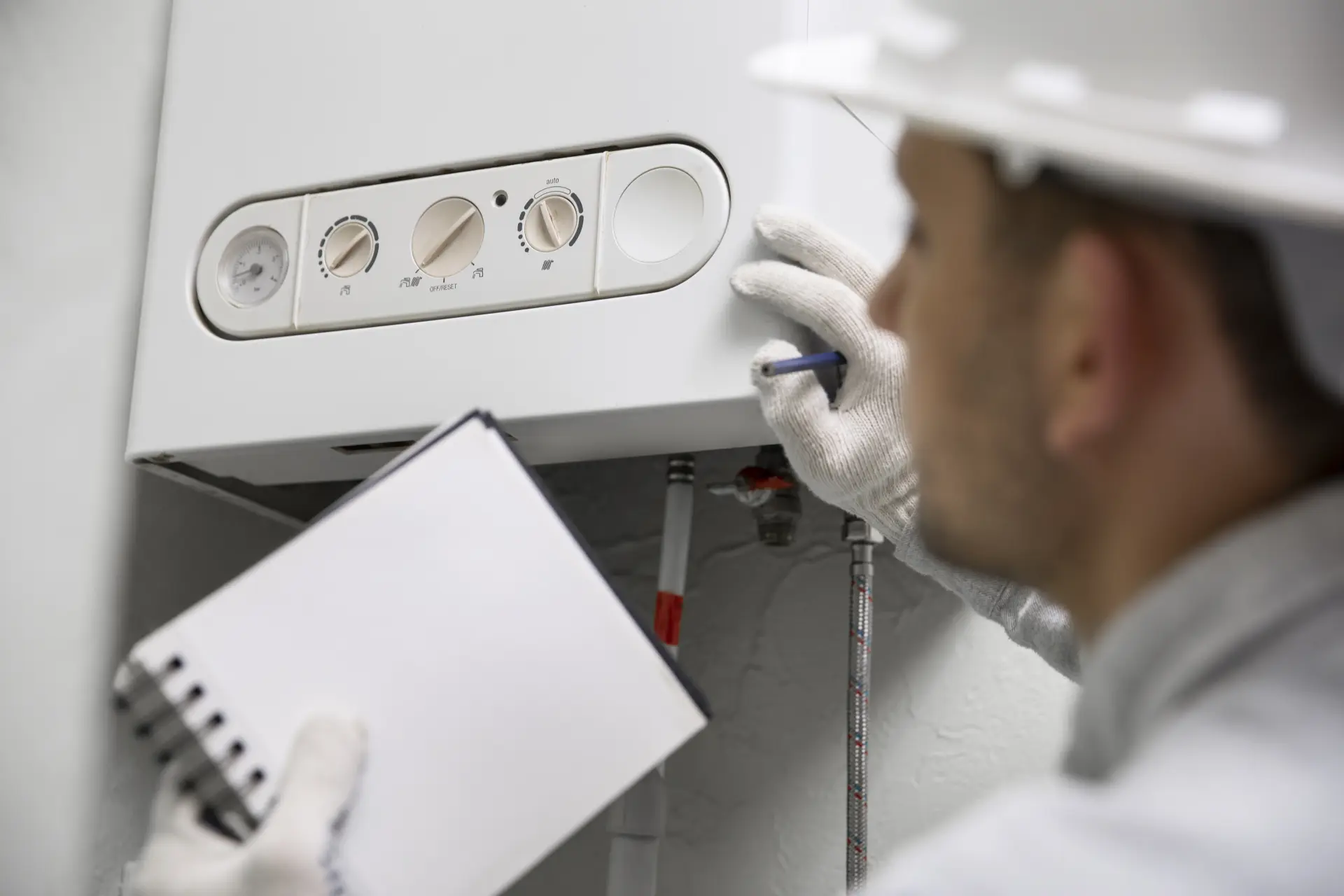
Most homeowners don’t think about their water heater until the hot water runs out, the unit starts making unusual noises, or water appears around the tank. However, knowing how long a water heater typically lasts can help you plan maintenance, recognize developing problems, and prepare for replacement before an unexpected breakdown.
A traditional tank water heater commonly lasts around 8–12 years, while many tankless water heaters can last 20 years or longer with appropriate maintenance. These are general estimates, not guaranteed lifespans. Actual longevity depends on the equipment, installation quality, water conditions, maintenance history, and household usage.
For Las Vegas homeowners, water hardness is another consideration. Southern Nevada’s water contains dissolved calcium and magnesium, which can contribute to mineral scale and sediment accumulation in certain water-heating systems.
But does hard water actually shorten a water heater’s lifespan? Should a 10-year-old water heater be replaced even if it still works? And how can you tell whether a repair is worthwhile?
This guide explains the expected lifespan of different water heaters, factors that influence longevity, warning signs of aging equipment, and how to decide when replacement makes sense.
If your current unit is experiencing problems, explore our water heater repair and installation services in Las Vegas.
The expected lifespan depends primarily on the type of water heater and the conditions under which it operates.
Conventional storage-tank water heaters commonly have an estimated service life of approximately 8–12 years. These units store heated water inside an insulated tank and maintain it at a set temperature.
Their lifespan depends on factors such as:
A tank water heater can fail before reaching eight years, while another may operate beyond twelve years.
The range describes common expectations rather than a mandatory replacement schedule.
Many tankless water heaters have an expected service life of 20 years or longer when properly installed, maintained, and operated within their design requirements.
Tankless systems heat water as needed rather than storing a large volume of hot water.
They also use different components and have maintenance requirements that vary by manufacturer and model.
Mineral scale can be particularly relevant to certain tankless heat exchangers, making appropriate water-quality management and manufacturer-recommended maintenance important.
Both gas and electric water heaters can provide years of reliable service.
However, it is difficult to assign a universally accurate lifespan based only on fuel type.
Longevity depends on:
A well-maintained unit may last longer than a poorly maintained system regardless of whether it uses gas or electricity.
Las Vegas water conditions can influence maintenance needs, but the city itself doesn’t determine exactly how long a water heater will last.
The most relevant local factor is water hardness.
Hard water contains dissolved minerals, primarily calcium and magnesium.
These minerals enter the water supply naturally as water moves through geological formations.
The Southern Nevada Water Authority provides information about local water quality, including hardness.
Water hardness can vary depending on the source and operating conditions.
Minerals can contribute to scale and sediment accumulation in certain water-heating systems.
In tank-style heaters, sediment may collect over time.
In some tankless units, mineral scale can accumulate on surfaces exposed to heated water.
The effect depends on equipment design, temperature, maintenance, and water conditions.
No. Hard water can contribute to maintenance concerns and mineral accumulation, but it isn’t responsible for every water heater failure.
Water heaters can also fail because of corrosion, electrical problems, component wear, installation issues, or other equipment conditions.
For a detailed explanation, read our guide to how hard water affects plumbing in Las Vegas homes.
Several factors influence how long water-heating equipment continues operating reliably.
Understanding these variables is more useful than relying on age alone.
Water containing dissolved minerals can contribute to scale or sediment accumulation.
The effects differ between storage-tank and tankless equipment.
Water quality may also influence corrosion-related conditions, depending on the system.
Proper installation is important for safe operation and equipment reliability.
Installation requirements depend on the type of water heater, manufacturer specifications, and applicable codes.
Improper connections, unsuitable components, or other installation problems can affect performance and safety.
Water heaters have manufacturer-specific maintenance requirements.
Depending on the equipment, maintenance may involve checking components, evaluating scale-related concerns, or completing other prescribed procedures.
However, maintenance should not be treated as a universal DIY task.
Water heaters involve pressurized hot water and may also contain electrical or gas components.
Water heater demand varies among households.
A home with several occupants taking consecutive showers may place different demands on its system than a home with one or two occupants.
Usage patterns affect how frequently the equipment operates.
Different water heaters use different materials, components, and technologies.
Some designs may have longer expected service lives or more serviceable components than others.
Corrosion and component deterioration can affect water-heater reliability.
Storage-tank water heaters typically include corrosion-protection features, such as sacrificial anode rods in many models.
The condition and maintenance requirements of these components vary by manufacturer.
Water temperature settings can influence equipment operation, energy use, and scale formation.
However, temperature adjustments also involve important safety considerations, including scalding risk and water-system hygiene.
Follow manufacturer guidance and applicable safety recommendations rather than changing settings solely to extend equipment life.
Sediment is one of the most frequently discussed maintenance concerns involving conventional storage water heaters.
Over time, material can settle inside a tank.
Sediment can include mineral deposits and other material present in the water.
Heating can contribute to the formation of mineral scale under certain conditions.
Calcium-related deposits are particularly relevant when discussing hard water.
Depending on the system and amount of accumulation, sediment may contribute to:
However, these symptoms aren’t exclusive to sediment.
A water heater can make noises or perform poorly for other reasons.
Significant accumulation may negatively affect performance or contribute to operating conditions that place additional demands on certain components.
But it would be inaccurate to claim that every water heater exposed to hard water will fail prematurely.
The relationship depends on the equipment and actual conditions.
Tankless systems often have longer published or commonly cited expected service lives than conventional storage-tank water heaters.
However, lifespan isn’t the only factor homeowners should consider.
Depending on the model and application, tankless systems may offer:
Tankless systems may also involve:
The appropriate choice depends on household demand, existing utilities, installation conditions, and budget.
No.
Tankless water heaters still require maintenance according to the manufacturer’s instructions.
Mineral scale can affect certain internal components, particularly in hard-water conditions.
A longer expected lifespan doesn’t mean the system can operate indefinitely without attention.
Age is useful information, but the condition of the water heater matters more than the number alone.
Certain warning signs may indicate that the equipment needs repair or replacement.
If hot water becomes insufficient despite unchanged household usage, the equipment may need evaluation.
Possible causes include component problems, capacity limitations, or other operating issues.
Persistent popping, rumbling, or other unfamiliar sounds can indicate conditions that deserve attention.
However, sound alone doesn’t establish that replacement is necessary.
Visible water should be investigated promptly.
The source could involve a connection, valve, fitting, or the heater itself.
A failed storage tank generally requires replacement, while some external component leaks may be repairable.
Persistent discoloration can indicate several possible issues, including plumbing corrosion, sediment, or water-supply conditions.
Compare hot and cold water at multiple fixtures before assuming the heater is responsible.
Temperature fluctuations can involve controls, heating components, equipment capacity, or fixture-related problems.
The cause should be diagnosed.
Repeated failures may make replacement more practical, especially when the unit is older or repair costs are becoming substantial.
Not automatically.
A 10-year-old tank water heater may be approaching or within a commonly expected service-life range, but age alone doesn’t prove that it needs replacement.
Continued use may be appropriate when:
Replacement may become more attractive when:
A professional assessment can help determine whether continuing to repair the unit makes financial and practical sense.
For replacement options, explore our water heater repair and installation services in Las Vegas.
Many homeowners move into a property without knowing when the water heater was installed.
Fortunately, the equipment often provides useful identifying information.
Look for the manufacturer’s data plate or label.
It may include:
The serial number may help determine the manufacturing date.
Not necessarily.
A water heater may have been manufactured before it was installed.
The manufacturing date can provide a useful estimate, but installation records offer more specific information about how long the unit has been in service.
Previous invoices, installation receipts, home inspection reports, or property records may also help identify the installation date.
The decision depends on the equipment’s condition and the nature of the failure.
Repair may be appropriate when:
Replacement may be preferable when:
Replacing an entire water heater when the problem involves a repairable external connection may be unnecessary.
On the other hand, repeatedly repairing an extensively deteriorated unit may be impractical.
The correct choice requires evaluating the actual failure.
Water treatment can address certain water-quality concerns, but the benefits depend on the treatment technology and the problem being addressed.
Water filtration systems are designed to reduce particular substances according to their technology.
Traditional water softeners specifically reduce calcium and magnesium hardness.
These processes are not interchangeable.
Not necessarily.
An ordinary filter should not automatically be expected to soften hard water.
Some water-treatment technologies address hardness, while others focus on different substances.
Not necessarily.
The decision depends on actual water conditions, household preferences, equipment requirements, maintenance considerations, and the treatment system’s intended purpose.
Water treatment should be selected based on an identified concern rather than assuming every system provides the same result.
No maintenance routine can guarantee a particular lifespan, but appropriate care can help identify problems and support reliable operation.
Different models have different requirements.
Use the manufacturer’s instructions for your specific unit.
Periodically inspect accessible areas around the water heater for moisture.
Unusual noises may indicate that the equipment needs evaluation.
Notice whether hot water lasts as long as expected and whether temperatures remain consistent.
Where mineral accumulation is a concern, follow the equipment manufacturer’s guidance regarding maintenance and water quality.
Water heaters involve hot water under pressure and may also use electricity or gas.
Maintenance and repairs involving these hazards should be performed by appropriately qualified professionals.
For broader household maintenance, use our plumbing maintenance checklist for Las Vegas homeowners.
Yes. Some water heaters continue operating beyond their commonly expected lifespan.
However, age should be considered alongside condition, reliability, safety, and maintenance history.
Not automatically. A 10-year-old water heater may still operate reliably.
Replacement decisions should consider its condition, performance, repair history, and whether significant deterioration is present.
Many conventional electric storage water heaters fall within the general 8–12-year lifespan commonly cited for tank-style systems.
Actual service life can vary considerably.
Conventional gas storage water heaters also commonly fall within a general service-life range of approximately 8–12 years.
Equipment design, installation, maintenance, and usage influence longevity.
Many tankless water heaters have expected service lives of 20 years or longer, but this depends on the model, water conditions, maintenance, and operating requirements.
Warning signs include insufficient hot water, leaks, unusual noises, inconsistent temperatures, recurring problems, and changes in hot-water appearance.
Read our guide to signs your water heater needs repair for more details.
The decision depends on the failure, equipment condition, available parts, repair cost, reliability, and expected remaining service life.
A qualified assessment can help identify the most practical option.
A water heater’s lifespan is influenced by much more than its age.
Tank-style water heaters commonly last around 8–12 years, while many tankless systems can operate for 20 years or longer with appropriate care. However, neither estimate guarantees how long a particular unit will remain reliable.
For Las Vegas homeowners, hard-water mineral accumulation is one factor worth considering alongside installation quality, maintenance, usage, and equipment condition.
If your water heater is approaching an older age range, pay attention to performance rather than assuming replacement is automatically necessary.
Unusual noises, leaks, insufficient hot water, or recurring breakdowns may indicate that the system needs professional evaluation.
Save More Handyman provides water heater and plumbing-related services in Las Vegas. Contact us now for free estimates.

 Americanwood St, Las Vegas, NV 89130, United States
 savemorehm@gmail.com
Get a Free Estimate Today!
Call us for a cost estimate over the phone.
Copyright © 2026 Save More Handyman Services. All rights reserved