Why Does My Toilet Keep Clogging? Causes and Fixes
November 11, 2026
 8:00am – 6:00pm, Mon-Thur : 8:00am – 4:00pm, Fri-Sat: Sun-Closed
 Americanwood St, Las Vegas, NV 89130, United States
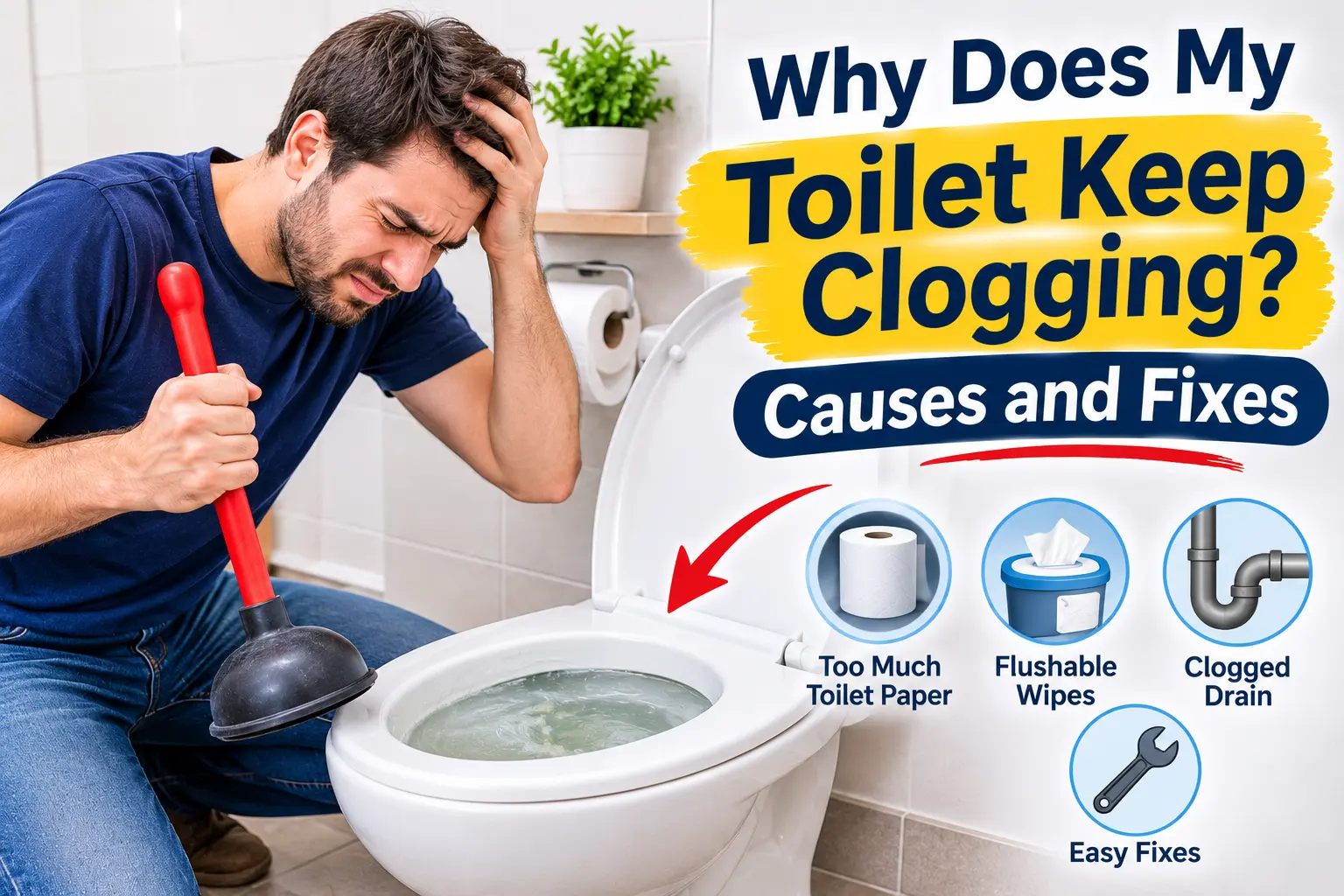
An occasional toilet clog can happen in any home. When it happens repeatedly, though, plunging may only be clearing the immediate blockage without addressing what caused it.
The problem could be as simple as too much paper in one flush or an object caught inside the toilet. It could also involve a weak flush, a blockage farther down the drain, or an issue affecting several fixtures. Replacing the toilet won’t solve every recurring clog, so it pays to narrow down the cause first.
Here’s how to read the symptoms, what you can safely try, and when to call a professional.
Before reaching for a tool, consider when and where the clogs happen:
These clues aren’t a diagnosis on their own. They help determine whether to focus on the toilet or have the wider plumbing system checked.
Even toilet paper can create a clog when a large amount enters the bowl at once, particularly if there’s already a partial obstruction.
Other materials are more likely to cause trouble. Wipes—even those marketed as flushable—paper towels, cotton products, feminine hygiene products, and dental floss belong in the trash. They don’t necessarily break apart as readily as toilet paper and can catch inside the toilet or drain.
If paper use is the likely trigger, try using less per flush and flushing twice when necessary. If clogs continue under normal use, look for another cause rather than assuming the household is doing something wrong.
A toy, cleaning product cap, toothbrush, or other small object can lodge in the toilet’s internal trap. Water may still pass around it, making the toilet appear clear until paper catches on the object and causes another clog.
This is especially worth considering if the problem began suddenly in a home with young children. Plunging can move an object farther into the drain, so if you know something solid was flushed, avoid repeated plunging and ask a professional to retrieve it.
A plunger may create enough movement to restore some flow while leaving material behind. The next flush works poorly, and the cycle repeats.
A partial blockage can be in the toilet itself or farther down the branch drain. Its location matters: replacing the toilet won’t remove a blockage in the pipe beneath it.
The toilet needs enough water, delivered at the right speed, to carry waste through its trap. A weak flush may result from:
Some toilets use different flush mechanisms, so check the manufacturer’s instructions before adjusting parts. If your toilet also runs between flushes, our guide to why a toilet keeps running explains how to check the tank components.
Las Vegas water contains dissolved minerals that can leave scale on plumbing fixtures. Over time, deposits may restrict the small openings that direct water into a toilet bowl, contributing to a weak flush.
That doesn’t mean hard water is the cause of every weak-flushing toilet. Tank settings, mechanical parts, and drain obstructions should also be considered. Learn more about how hard water affects household plumbing.
Plumbing vents help air move through the drainage system. A blocked or damaged vent can contribute to drainage problems, although gurgling or slow flow can also result from a drain blockage.
If the toilet gurgles when a nearby sink or shower drains, or several fixtures are acting up, have the system assessed rather than assuming the vent is the culprit. Vent inspection may involve roof access and is best left to a qualified professional.
If the bowl is close to overflowing, don’t flush again. Wait for the water level to drop. If water continues entering the bowl or tank and overflow is imminent, close the toilet’s shutoff valve if you can do so safely without forcing it.
For an ordinary blockage:
A toilet auger is another option for a blockage a plunger can’t clear. It is designed to reach into the toilet’s trap, but using it roughly can scratch porcelain or damage the fixture. If you’re uncomfortable using one, or suspect a solid object is lodged inside, call a professional.
Avoid chemical drain cleaners in a toilet. They can splash during plunging, create a hazard for anyone working on the drain, and may not clear the obstruction. If you’ve already used one, tell the person handling the repair.
Stop using the affected fixtures and arrange professional help promptly if you notice:
These symptoms can point to a blockage in a shared drain or sewer line, though an inspection is needed to locate it. Keep people and pets away from sewage-contaminated areas, and don’t continue running water while waiting for help.
For other symptoms that may appear alongside drainage issues, see our overview of common plumbing problems in Las Vegas homes.
Start with diagnosis, not replacement. A toilet may work normally again after an obstruction is removed or a flush mechanism is repaired. If the problem is in the drain line, a new toilet will likely clog too.
Replacement may be worth considering when the toilet has a known history of poor flushing performance, has a damaged internal passage, or needs several repairs. It may also make sense if the porcelain is cracked or you want to replace an older, high-water-use model.
Our guide to the signs a toilet needs replacement covers how to weigh those factors and what installation involves.
For other routine checks, use our Las Vegas plumbing maintenance checklist.
A recurring clog doesn’t automatically mean you need a new toilet—or that there’s a major sewer problem. The pattern of the blockage, the flush strength, and the condition of nearby drains provide useful clues.
If basic plunging doesn’t resolve it, or the problem affects multiple fixtures, a qualified plumbing professional can investigate before you spend money replacing parts that may not be responsible.


 Americanwood St, Las Vegas, NV 89130, United States
 savemorehm@gmail.com
Get a Free Estimate Today!
Call us for a cost estimate over the phone.
Copyright © 2026 Save More Handyman Services. All rights reserved