Kitchen Faucet Dripping or Leaking? Causes and Repairs
November 9, 2026

 8:00am – 6:00pm, Mon-Thur : 8:00am – 4:00pm, Fri-Sat: Sun-Closed
 Americanwood St, Las Vegas, NV 89130, United States
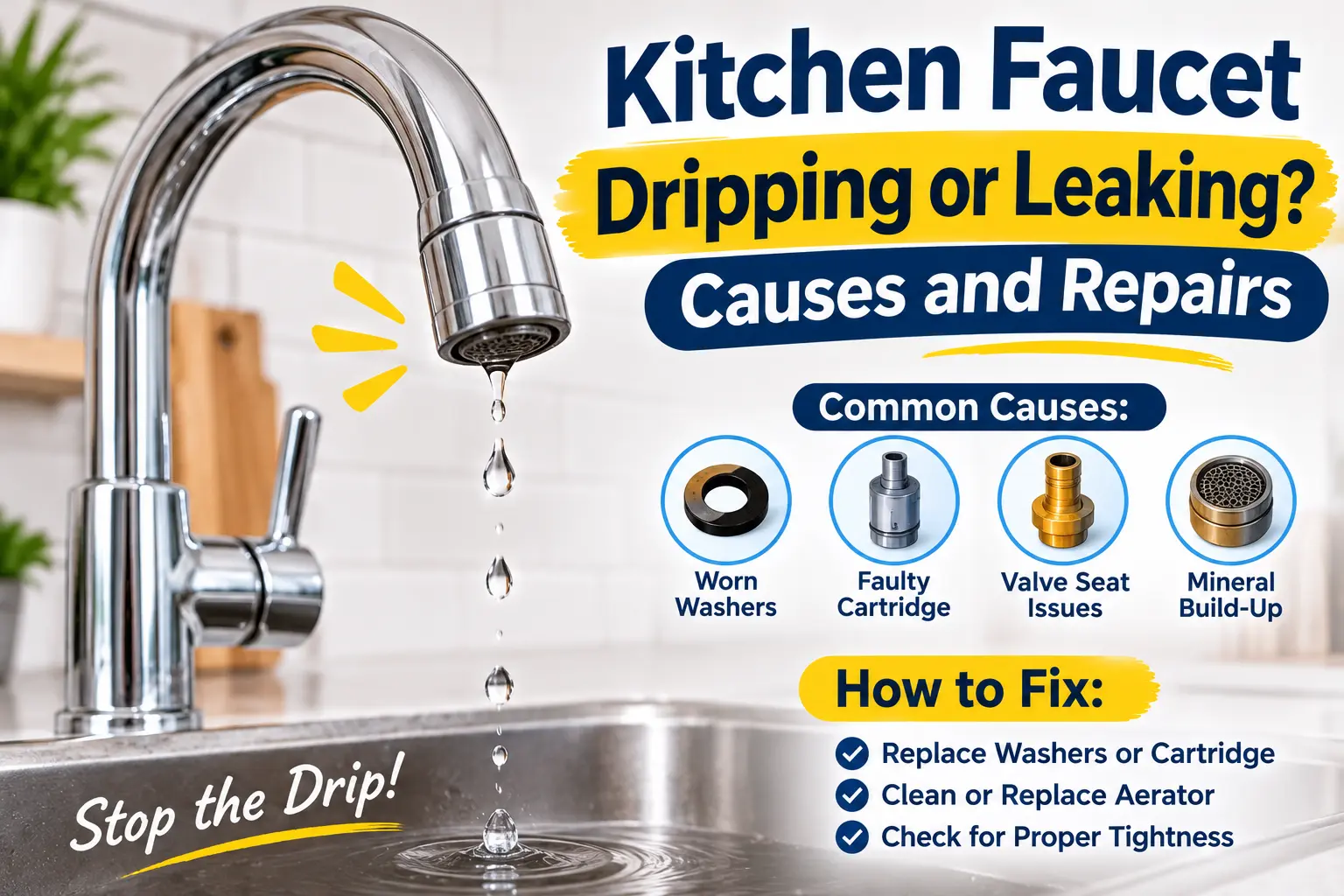
A dripping kitchen faucet is easy to tune out, but the waste adds up. The EPA’s WaterSense program estimates that a faucet dripping once per second can waste more than 3,000 gallons a year. A leak at the base of the faucet or under the sink is worse, because water that never reaches the drain can soak the cabinet, swell the sink base, and go unnoticed for months.
The right fix depends on where the water is coming from. A drip from the spout, a puddle around the base, a wet handle, and a damp cabinet floor are four different problems with four different causes. This guide helps you identify which one you have, explains what is realistic to fix yourself, and points out when a leak is a symptom of something bigger.
Before buying parts, spend ten minutes finding the actual source.
A leak that appears only when the water is running points to the faucet body, handle, or hose. A leak that appears even when the faucet is off, or only when the supply valves are open, points to a supply line, valve, or connection under the sink.
A steady drip from the spout means the faucet’s internal shutoff isn’t sealing. What’s inside depends on the faucet type.
Most modern single-handle faucets use a replaceable cartridge. When its internal seals wear, water slips past even with the handle closed. The cartridge is the most common culprit in a dripping single-handle faucet, and replacing it is a standard repair.
Older two-handle faucets use rubber washers pressed against a metal seat. The washer wears down, or the seat becomes pitted, and the faucet drips from the spout. A dripping faucet that stops when you tighten one handle harder usually has a worn washer on that side.
Ball-type faucets, common in older single-handle designs, depend on small rubber seats and springs that wear out. Ceramic disc faucets are durable, but their seals and the disc cylinder can fail, especially if debris or scale gets between the discs.
In Las Vegas, where the water supply carries a significant mineral load (see the Southern Nevada Water Authority’s published water-quality data), scale can build up on cartridges, seats, and discs and keep them from sealing cleanly. That is one possible cause, not the default one. Most faucet drips come from ordinary wear, and a faucet that is 10 or 15 years old would likely need new internal parts anywhere in the country. If you do find a crusty white deposit on the parts you remove, our article on how hard water affects faucets and plumbing fixtures explains how mineral scale differs from corrosion and what each does to metal components.
Swivel spouts rely on rubber O-rings where the spout meets the faucet body. When they harden or wear, water works its way out around the base whenever the faucet is on. The fix is usually replacing the O-rings, though it requires disassembling the spout.
Water escaping from the handle usually points to a worn cartridge, a loose retaining nut, or a worn O-ring or packing seal. Because the handle is directly above the cartridge, a leak here and a drip from the spout often have the same root cause.
If water collects under or around the faucet body itself, the cause may be a loose mounting nut below the sink, a deteriorated gasket between the faucet and the countertop, or a failed internal seal. This is worth correcting promptly, because water can seep into the countertop edge and the cabinet below.
Many homeowners who think the faucet is leaking are looking at a nearby connection.
A slow leak in this area is one of the more common ways to end up with a hidden problem. The cabinet floor is often particleboard that swells and crumbles when wet, and mold can follow if the leak persists. See our guide to the signs of a hidden water leak for the warning signs, including a musty cabinet odor, swollen cabinet panels, and unexplained increases in your water bill.
Some faucet symptoms are annoying but don’t involve a leak at all.
Faucet repairs are a common DIY project because the work involves no gas, no electrical components, and no hot-water tank. With the water off at the fixture, the risk is low.
Reasonable DIY repairs:
Before you start:
A faucet repair that looks simple can turn out not to be. Consider calling a plumber or experienced handyman when:
For these situations, our kitchen faucet repair and installation services in Las Vegas can diagnose the source, repair what’s repairable, and replace what isn’t.
Repair is usually the right first move when the faucet is in good condition and the problem is a seal, cartridge, or O-ring. Replacement tends to make sense when:
The reasoning is similar to our guide on water heater repair vs. replacement: compare the cost and remaining life of the old unit against a new one, instead of assuming either path is always cheaper.
Most dripping kitchen faucets come down to a worn cartridge, washer, or O-ring, and most homeowners can handle those repairs with the water shut off and the right part. The more important question is where the water is actually going. A drip in the sink is a nuisance. A slow leak in the cabinet is a hidden problem that damages materials and invites mold. Locate the source first, fix what’s within your comfort level, and bring in a professional when the valves, the cabinet, or the faucet body itself are involved.



 Americanwood St, Las Vegas, NV 89130, United States
 savemorehm@gmail.com
Get a Free Estimate Today!
Call us for a cost estimate over the phone.
Copyright © 2026 Save More Handyman Services. All rights reserved