Mold After Water Damage – What You Need to Know
November 4, 2026
 8:00am – 6:00pm, Mon-Thur : 8:00am – 4:00pm, Fri-Sat: Sun-Closed
 Americanwood St, Las Vegas, NV 89130, United States
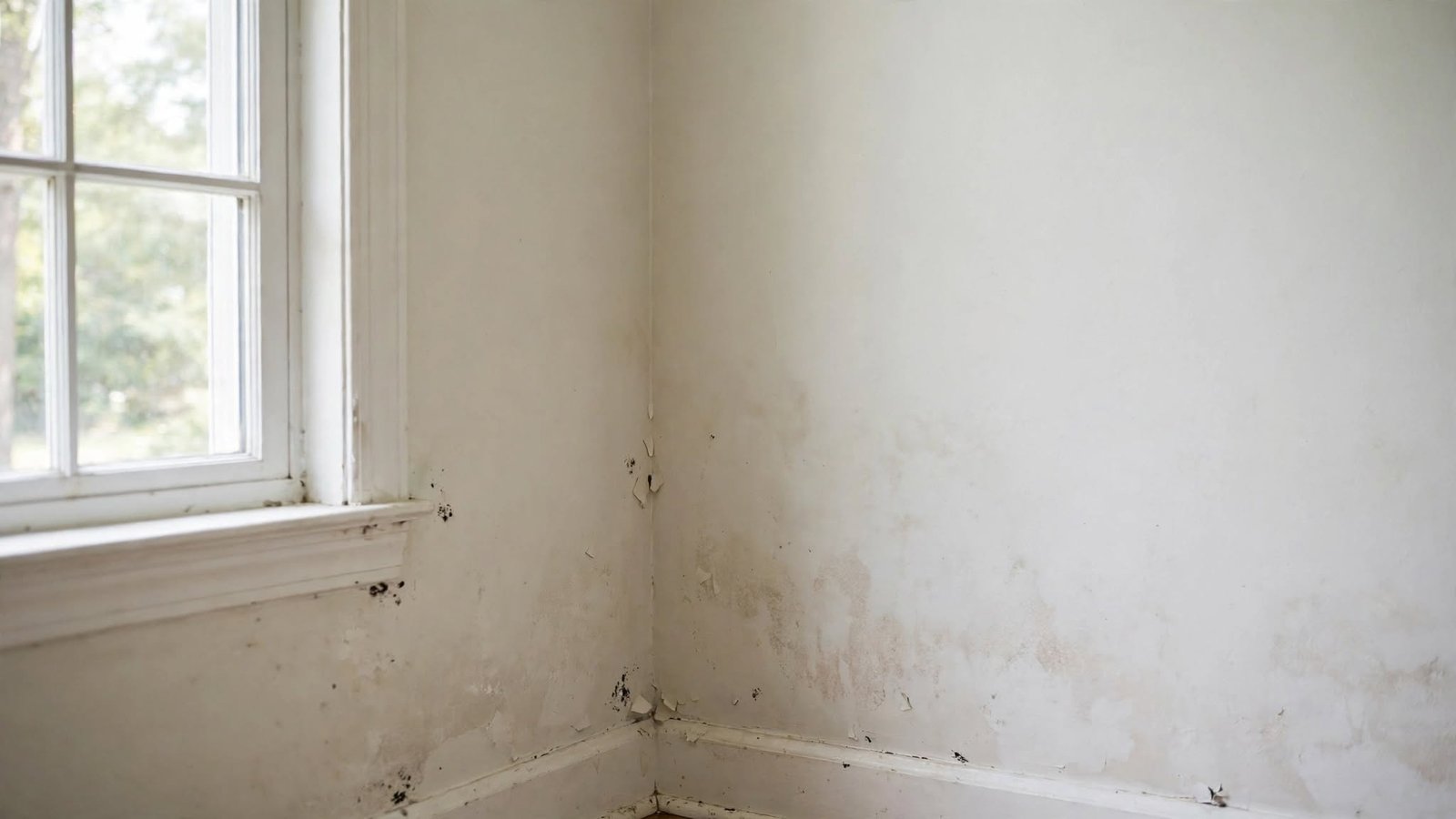
There’s a persistent belief among Las Vegas homeowners that our desert climate makes mold a non-issue. While it’s true that our low outdoor humidity makes widespread mold problems less common than in humid regions, mold after water damage is entirely location-independent. Mold doesn’t care what the weather looks like outside—it cares whether there’s moisture inside your walls, and a plumbing leak, roof intrusion, or AC condensation problem creates exactly the environment it needs.
The critical fact about mold is timing: it can begin colonizing a wet surface within 24 to 48 hours. That means the window between “water leak discovered” and “mold problem established” is shorter than most homeowners realize. What you do in those first two days largely determines whether you’re dealing with a drying task or a remediation project.
This guide covers why mold follows water damage, where it hides, when you can handle small areas yourself, and when professional remediation is the only safe option.
Mold spores are already present in every home—they float in the air both indoors and outdoors and are harmless in that state. Mold becomes a problem only when spores land on a surface that offers three conditions:
Moisture. The essential ingredient. Mold requires persistent dampness—not necessarily standing water, but enough moisture to keep a surface wet over hours and days. Saturated drywall after a water leak holds moisture for days, making it a prime host.
An organic food source. Mold feeds on cellulose and other organic materials. Unfortunately, modern home construction is full of them: the paper facing on drywall, wood framing, plywood subflooring, carpet backing, dust, and even the adhesives in flooring and wallpaper. This is why mold on drywall is a bigger concern than mold on tile or glass—drywall gives it both moisture retention and food.
Moderate temperatures. Indoor temperatures in Las Vegas homes—typically 70–80°F year-round thanks to air conditioning—are squarely within mold’s comfort range. Your thermostat does not protect you.
It’s worth being precise here: Las Vegas’s dry outdoor air is a genuine advantage, but it only helps if moisture is exposed to it. Mold problems develop in enclosed, humid microclimates inside the home—wall cavities, ceiling spaces, under cabinets, and behind baseboards—where outdoor dryness never reaches.
Several local factors create these indoor moisture pockets:
Industry and EPA guidance consistently notes that mold can begin growing on wet surfaces within 24 to 48 hours. This is why drying speed—not drying eventually—is what matters. Water damage that is dried thoroughly within the first two days often never develops mold at all. Water damage that sits damp for a week almost always develops some level of colonization, whether visible or hidden.
Visible mold on a wall surface is the obvious scenario, but it’s not the common one. In most water damage situations, mold establishes itself in places you can’t directly see:
When a supply line leaks inside a wall, water runs down the inside of the drywall and pools at the bottom of the cavity, soaking the sill plate and lower drywall. Mold can colonize this entire hidden surface while the visible wall face shows only a faint stain—or nothing at all.
Water from a slab leak, appliance overflow, or upstairs bathroom leak wicks into carpet padding and plywood subflooring. Carpet padding is especially problematic: it’s porous, holds moisture for a long time, and rarely dries in place. Baseboards trap moisture against the wall’s most vulnerable edge.
As covered in our guide to water stains on ceilings, a ceiling stain is the visible endpoint of moisture that has already traveled through an attic or framing above. The dark, undisturbed space around that stain is exactly where mold thrives—especially on roof decking and insulation near a slow roof leak or condensation drip.
Mold inside ductwork or around an air handler is its own category of problem because the system actively distributes spores throughout the home. This situation always calls for professional assessment.
Because hidden mold is common, learn to recognize the indirect evidence:
Mold deserves respect but not panic. According to CDC guidance, mold exposure can cause symptoms like nasal stuffiness, throat irritation, coughing or wheezing, and eye or skin irritation in sensitive individuals. People with asthma, allergies, chronic respiratory conditions, or weakened immune systems may experience stronger reactions.
Two points that cut through common misinformation:
You don’t need to identify the mold species before removing it. CDC guidance is clear that all mold should be removed using the same approach regardless of type. The Internet’s obsession with “toxic black mold” has distorted priorities—any significant indoor mold growth warrants removal, and no variety of mold is acceptable to leave in place.
Mold testing is usually unnecessary when growth is visible. The EPA’s position is straightforward: if you can see or smell mold, you have a mold problem, and the appropriate response is removal and moisture control—not paying for air sampling to confirm what’s already confirmed. Testing becomes relevant mainly in disputes (landlord/tenant, insurance, real estate transactions) or when mold is strongly suspected but hidden.
Small mold problems from clean water sources can often be handled by homeowners. The EPA’s general guideline is an affected area smaller than roughly 10 square feet (about a 3-foot by 3-foot patch).
DIY cleanup is reasonable when all of these are true:
How to do it safely:
If mold returns after a proper cleaning, the moisture source was not actually resolved—which is a plumbing or water-intrusion problem, not a cleaning problem.
Call a professional if any of the following apply:
What professional remediation actually involves: isolating the work area with plastic sheeting and negative air pressure, removing contaminated porous materials, HEPA vacuuming and cleaning remaining surfaces, thoroughly drying the structure with moisture monitoring, and—only after the space is dry and clean—rebuilding with new materials. Rebuilding is the last step, never the first; the most common remediation failure is covering over moisture that was never resolved.
Fix the source first. Every mold prevention effort fails if water is still entering the building. If the source is plumbing, address the leak before anything else—our plumbing services in Las Vegas include leak detection and repair, which should always precede restoration work.
Dry everything within 48 hours. This is the decisive move. Circulate air, run dehumidifiers, remove saturated materials that can’t dry in place, and verify dryness with a moisture meter rather than by touch. Surfaces can feel dry days before cavities and padding actually are.
Remove what can’t be saved. Wet insulation, soaked carpet padding, and saturated drywall hold moisture longer than the environment can remove it. Leaving them in place “to dry” is the most common path from a water event to a mold project.
Use the Las Vegas climate to your advantage. Our low outdoor humidity makes ventilation drying unusually effective—when the affected space is open to dry outdoor air. During monsoon season, when outdoor humidity spikes, mechanical drying (fans plus dehumidifiers) becomes more important.
Watch the repair area for a few weeks. Musty odor, returning stains, or regrowth means the job isn’t done. Catching it early keeps a small problem small.
Mold after water damage is a race against a 48-hour clock, and the finishing order is determined by how fast the structure dries—not by the climate outside. Small, surface-level mold on hard surfaces after a resolved leak is a manageable DIY task. Anything larger, hidden, contaminated, or recurring belongs in the hands of professionals who can contain, remove, and verify—and who fix the moisture source before rebuilding.
If you’ve experienced water damage in your Las Vegas home and aren’t sure whether mold has taken hold, a professional assessment is inexpensive insurance against a much larger remediation bill later.


 Americanwood St, Las Vegas, NV 89130, United States
 savemorehm@gmail.com
Get a Free Estimate Today!
Call us for a cost estimate over the phone.
Copyright © 2026 Save More Handyman Services. All rights reserved