Water Damage to Drywall | When to Call a Professional
October 31, 2026
 8:00am – 6:00pm, Mon-Thur : 8:00am – 4:00pm, Fri-Sat: Sun-Closed
 Americanwood St, Las Vegas, NV 89130, United States
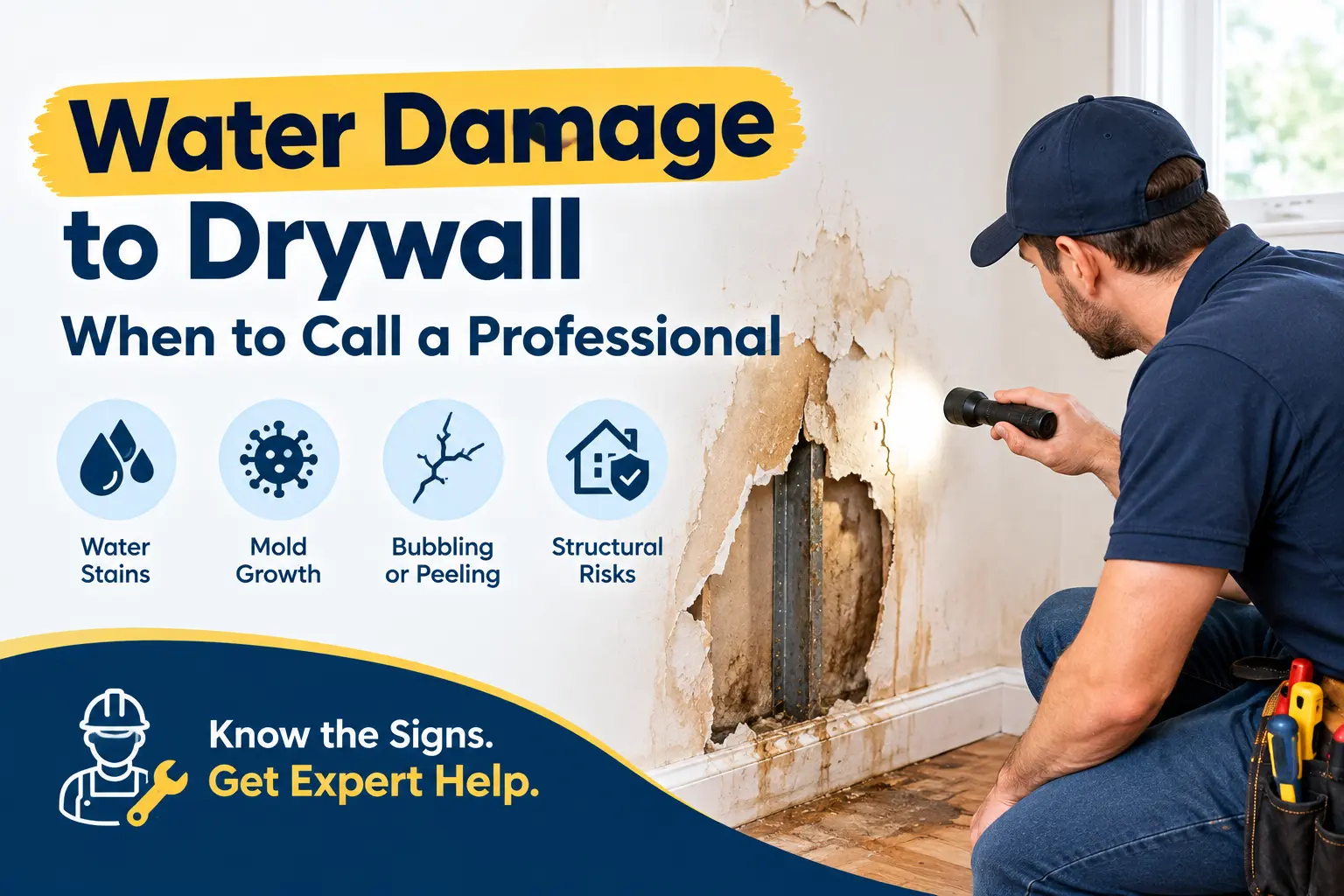
Water damage to drywall is one of the most common—and most misunderstood—problems homeowners face in Las Vegas. Whether it’s caused by a hidden water leak, a burst pipe, a roof leak, or even high humidity, wet drywall can quickly escalate from a cosmetic nuisance to a structural and health concern.
The challenge isn’t always obvious: drywall can absorb water and hide damage behind the surface, meaning what looks like a small stain might indicate a much larger problem. Understanding when you can safely handle the repair yourself—and when you absolutely need a professional—is critical to protecting your home and avoiding costly mistakes.
Drywall is made of gypsum plaster sandwiched between two layers of paper. When exposed to moisture, it absorbs water like a sponge, which causes several progressive problems:
Softening and weakening of the gypsum core is the first sign. Drywall that was rigid and load-bearing becomes spongy and loses structural integrity. The paper facing also begins to absorb moisture, which can lead to discoloration (often appearing as brown, tan, or yellowish staining).
Adhesive failure occurs when water compromises the joint compound, tape, and adhesive used to seal seams between drywall panels. Tape may bubble, bulge, or separate from the wall surface.
Mold and mildew growth is the most dangerous secondary effect. Drywall provides an ideal breeding ground for mold, which thrives in damp, dark environments. Mold can become visible as black, green, or gray patches—but it can also grow hidden inside walls where you can’t see it.
Warping and buckling occurs as water causes the gypsum to expand unevenly. The paper facing may separate from the core, creating visible waves or bulges in the wall surface.
Structural compromise happens when water saturates the drywall to the point where it no longer supports its own weight or any fasteners (nails, screws) that hold fixtures, shelves, or electrical boxes to the wall.
If water damage goes untreated, the drywall may become completely saturated and need full replacement. The wood framing behind the drywall can also begin to rot, which is far more expensive to repair than replacing drywall alone. Additionally, prolonged moisture creates an environment for mold to spread into insulation, underlayment, and structural lumber.
Understanding the source of the water is essential for determining whether the repair is temporary or requires addressing the underlying cause first.
Interior plumbing leaks are among the most common culprits. A hidden water leak in a wall can go unnoticed for weeks, silently saturating the drywall and framing behind it. Burst pipes—especially during the rare freezes Las Vegas occasionally experiences—can flood walls and ceilings quickly.
Action required: Before any drywall repair in Las Vegas, the plumbing source must be identified and fixed. Our plumbing services can help locate and repair leaks.
Las Vegas’s dry climate means most homeowners don’t expect roof problems—but monsoon storms, poorly sealed skylights, or damaged flashing can allow water to enter through the roof and travel into interior walls and ceilings.
Action required: The roof leak must be sealed before drywall can be repaired effectively.
Water from showers, tubs, or sinks can damage nearby drywall if it’s not properly protected or if caulk and waterproofing have failed. This is typically localized and less severe than other sources.
In Las Vegas, humidity is rarely the primary cause of drywall damage—our climate is naturally dry. However, in bathrooms with poor ventilation or basements with high groundwater, condensation can accumulate on drywall surfaces, especially in winter.
The answer depends on the severity of the damage and the underlying cause.
What qualifies as minor:
DIY-friendly approach:
Caution: If the stain persists after drying, or if the drywall feels soft or spongy to the touch, the damage extends deeper than surface staining and requires professional intervention.
What qualifies as moderate:
Why DIY isn’t advisable:
Professional approach: A professional will assess the damage, determine how deep it extends, test for mold, cut out the damaged section, replace the drywall, tape and mud the seams, and finish to match the existing wall.
What qualifies as severe:
Why DIY is not an option:
Professional approach: Water damage restoration specialists will conduct moisture mapping, remove contaminated materials, treat for mold, dry the structure, replace damaged framing or drywall, and restore the area to safe, code-compliant condition.
Before attempting any repair, the drywall must be completely dry. This is non-negotiable.
Las Vegas advantage: Our low outdoor humidity means opening windows and using fans is often the most effective drying method, especially during low-humidity months.
Contact a handyman or restoration specialist if:
Regular maintenance and prompt repair of leaks prevent water from ever reaching your drywall.
Caulk around bathroom fixtures, ensure shower enclosures are properly sealed, and use bathroom exhaust fans during and for 20 minutes after showers.
Check for damaged shingles, missing flashing, or compromised caulk around skylights, especially after Las Vegas storms.
Proper bathroom and kitchen ventilation reduces humidity and condensation, which can contribute to moisture problems.
Discoloration, soft spots, or musty smells are early warning signs. Addressing them immediately prevents expensive water damage restoration later.
Water-damaged drywall often looks worse than it is—but it can also hide serious problems you can’t see. Surface stains on dry drywall are DIY-friendly, but any signs of structural weakness, mold, or ongoing water intrusion require professional assessment and repair.
If you’re in Las Vegas and unsure about water damage in your home, don’t wait. A professional inspection costs far less than the damage that occurs when a small problem becomes a big one.

 Americanwood St, Las Vegas, NV 89130, United States
 savemorehm@gmail.com
Get a Free Estimate Today!
Call us for a cost estimate over the phone.
Copyright © 2026 Save More Handyman Services. All rights reserved