Why Is My Water Heater Making Popping or Rumbling Noises?
October 28, 2026

 8:00am – 6:00pm, Mon-Thur : 8:00am – 4:00pm, Fri-Sat: Sun-Closed
 Americanwood St, Las Vegas, NV 89130, United States
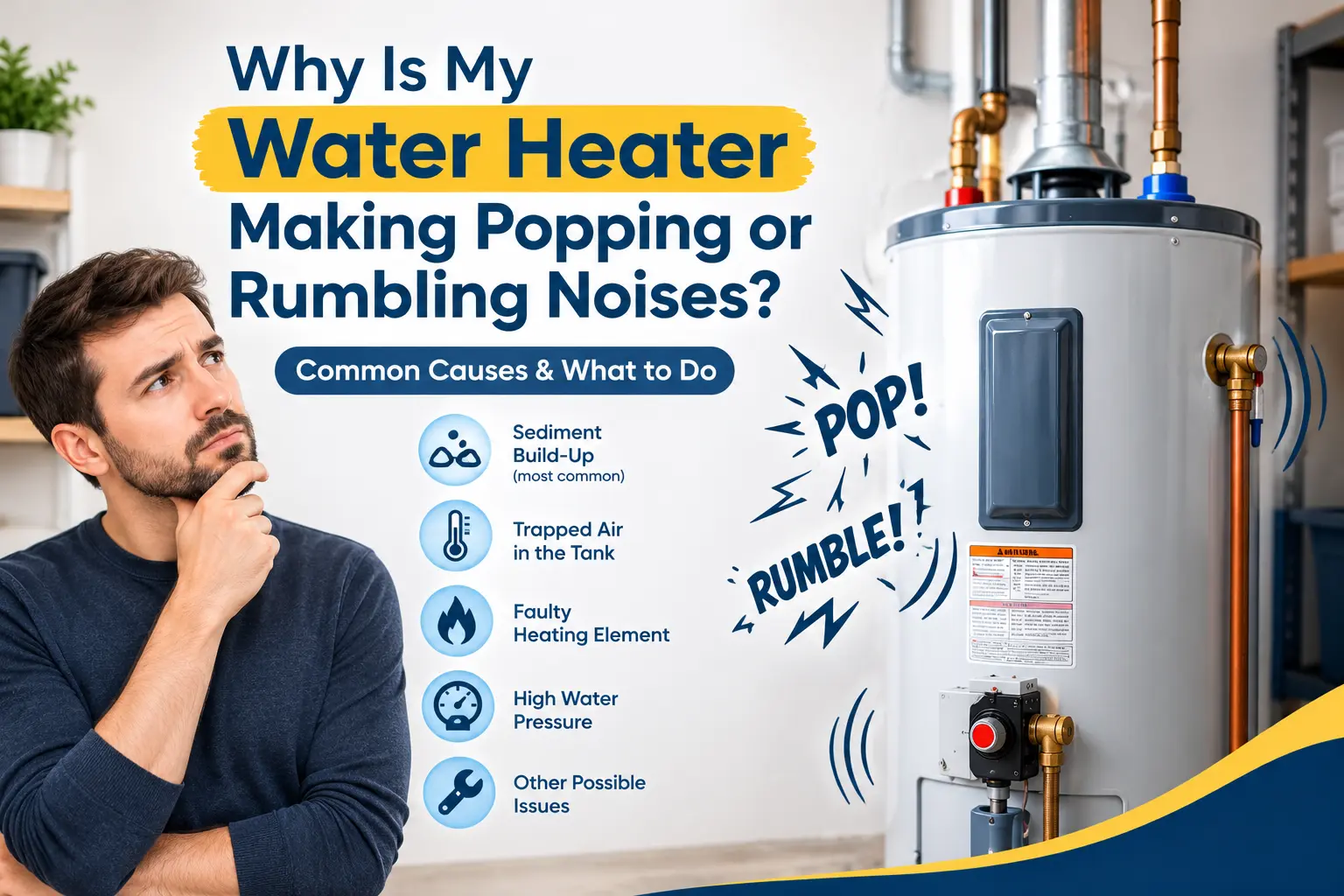
A water heater usually operates quietly enough that homeowners barely notice it. However, if you suddenly hear popping, rumbling, crackling, or knocking sounds coming from the unit, it’s natural to wonder whether something is wrong.
Unusual water heater noises can develop for several reasons. In conventional tank-style water heaters, mineral sediment accumulation is one possible explanation for popping and rumbling sounds. Other noises may originate from heating components, changes in water temperature, connected plumbing, or equipment-specific operating conditions.
For Las Vegas homeowners, sediment is particularly relevant because Southern Nevada’s water contains naturally occurring calcium and magnesium. These minerals contribute to water hardness and can form deposits in certain water-heating systems.
However, a noisy water heater does not automatically mean the tank is failing or that sediment is the cause. The type of sound, when it occurs, and whether the heater has other symptoms are important clues.
This guide explains why water heaters make popping, rumbling, knocking, and other unusual noises, how mineral buildup can affect equipment, and when professional inspection or repair may be necessary.
If your water heater is making persistent noises, leaking, or producing inconsistent hot water, explore our water heater repair in Las Vegas.
Water heaters produce heat and move water through connected plumbing. Depending on the equipment type, normal operation can create some sound.
However, noises that are new, unusually loud, persistent, or accompanied by performance problems deserve attention.
Homeowners may hear:
These sounds do not all indicate the same problem.
For example, rumbling in a storage-tank water heater may be associated with sediment, while banging in connected pipes may involve water hammer.
A sound that appears to originate from the heater may sometimes come from nearby plumbing.
No. Some equipment produces operating sounds that are normal for its design.
The more useful questions are:
These observations can help narrow down the cause.
Sediment accumulation is one of the commonly discussed causes of popping and rumbling in conventional storage-tank water heaters.
Over time, minerals and other material can settle inside the tank.
In some tank-style water heaters, water heated near accumulated sediment can create localized boiling or steam bubbles.
As those bubbles form and collapse or move through accumulated material, popping or rumbling sounds may occur.
The exact process depends on equipment design and operating conditions.
Water hardness is particularly relevant when evaluating sediment-related water heater noises in Southern Nevada.
Mineral-rich water can contribute to deposits in certain water-heating systems.
The potential effects depend on:
Mineral sediment can contribute to conditions associated with popping in some storage water heaters.
However, the sound alone does not establish the cause.
Other equipment or plumbing issues may produce similar noises.
A low rumbling sound may become noticeable while a storage-tank water heater is actively heating water.
Possible explanations include:
The cause depends on the type of unit.
If a sound occurs primarily during heating, it may be associated with the heating process or components operating during that cycle.
However, timing alone doesn’t provide a definitive diagnosis.
Occasional operating noise may not indicate an immediate problem.
But persistent, increasingly loud, or unfamiliar rumbling should be evaluated, particularly if hot-water performance has changed.
Knocking and banging can sound similar to popping, but they may originate from different parts of the system.
Sometimes the noise comes from plumbing connected to the water heater rather than the heater itself.
Potential causes include:
The sound may travel through framing and piping, making its source difficult to identify.
Repeated pressure surges can place stress on fittings and other plumbing components.
However, banging alone doesn’t establish that damage has occurred.
Persistent symptoms deserve evaluation.
For more information, read our guide to why plumbing pipes make noise.
Crackling sounds may be associated with heating processes, mineral accumulation, or other equipment conditions.
The explanation depends on whether the unit uses gas, electricity, or another heating technology.
In some storage-tank systems, sediment-related conditions can contribute to crackling or popping.
However, this isn’t the only possible cause.
Electric water heaters use heating elements to transfer heat into the water.
Unusual sounds may justify evaluating the equipment, particularly when heating performance is also affected.
Not necessarily.
But a new, persistent, or worsening sound should not be ignored.
Avoid opening electrical compartments or attempting to inspect energized components.
Electrical repairs require appropriately qualified professionals.
Hissing may occur for several reasons, including water movement, equipment operation, or leakage.
The location and timing are important.
Depending on the system, the sound may involve:
Visible moisture around the unit should be investigated promptly.
The leak may originate from a valve, connection, fitting, tank, or nearby plumbing.
Sometimes sounds heard near a water heater originate from connected hot-water pipes.
Some pipe materials expand as they warm and contract as they cool.
Small movements can create clicking or ticking sounds when pipes contact supports or surrounding building materials.
You may notice clicking:
Occasional light clicking may not indicate a plumbing failure.
However, loud or persistent sounds should be evaluated in context.
Some water heaters can produce humming or vibrating sounds during operation.
The cause depends on the equipment type and components involved.
Depending on the system, humming may involve:
Certain tankless water heaters include fans and other components that may produce normal operating sounds.
A sound that suddenly becomes much louder, changes character, or occurs alongside poor performance may justify professional inspection.
Do not attempt to tighten, disconnect, or adjust internal components without the appropriate qualifications.
Tankless water heaters operate differently from conventional storage-tank units.
Instead of storing a large volume of heated water, they heat water as it flows through the equipment.
No.
Depending on the model, normal operation may involve sounds from:
The manufacturer’s documentation can help identify expected operating sounds.
Mineral scale can affect certain internal components and heat-transfer surfaces.
However, unusual noise does not automatically prove that scale is present.
The unit’s performance, maintenance history, and other symptoms should be considered.
Flushing is often discussed as a way to address sediment in certain storage-tank water heaters.
However, it should not be recommended as a universal solution without considering the equipment.
Not necessarily.
The effectiveness of maintenance depends on the amount and type of accumulation, equipment design, and condition of the unit.
No single procedure is suitable for all equipment.
Water heaters contain hot water under pressure and may involve gas or electrical systems.
Manufacturer instructions and equipment condition should guide maintenance decisions.
Older equipment may have deteriorated valves, fittings, or other components.
Attempting unfamiliar maintenance can create additional problems.
If your unit is making persistent noises, qualified inspection can help determine the appropriate next step.
Sometimes.
The appropriate solution depends on what is producing the sound.
A professional may determine that the problem involves:
Replacement may become appropriate when:
No.
A water heater should not automatically be replaced solely because it makes popping or rumbling sounds.
The source and significance of the noise should be identified first.
For a detailed decision guide, read Water Heater Repair vs. Replacement.
Homeowners can make several useful observations without dismantling equipment.
Is it:
Different sounds suggest different possible causes.
Does the sound occur:
The timing can help distinguish water-heater operation from connected plumbing noises.
Determine whether the heater still produces enough hot water.
If hot water runs out quickly, the issue may involve equipment capacity, heating components, or other conditions.
Read Why Is My Water Heater Not Producing Enough Hot Water? for additional troubleshooting.
Without opening equipment, check accessible areas around the heater and nearby plumbing.
Water around the unit should be investigated.
Older equipment may have different maintenance and replacement considerations.
However, age alone doesn’t establish the cause of a noise.
If the sound is persistent, worsening, or accompanied by other symptoms, professional diagnosis may be appropriate.
Not every noise represents an emergency.
However, certain combinations of symptoms require prompt attention.
Seek qualified assistance when noises occur alongside:
Many storage water heaters include a temperature-and-pressure relief valve designed as an important safety component.
Never cap, block, or interfere with the valve or its discharge piping.
If you suspect a safety-device problem, use an appropriately qualified professional.
Not every noise can be prevented, but appropriate maintenance may help reduce certain problems.
Different water heaters require different maintenance procedures.
Pay attention to changes in hot-water availability and temperature.
Inspect accessible connections and surrounding areas periodically.
Don’t assume a new noise is normal simply because the heater continues producing hot water.
Hard water can contribute to mineral deposits in certain equipment.
Water heaters involve hot water, pressure, and potentially gas or electricity.
Use qualified professionals for work involving equipment hazards.
Popping in some storage-tank water heaters can be associated with sediment accumulation and heating processes.
However, other equipment conditions may produce similar sounds.
Some operating noise may occur, but persistent or increasingly loud rumbling should be evaluated, particularly when performance changes.
Hard-water minerals can contribute to sediment accumulation in certain tank-style water heaters.
Sediment-related heating conditions may produce popping or rumbling noises.
Flushing may be part of manufacturer-recommended maintenance for certain systems, but it is not guaranteed to resolve every noise.
The cause should be identified before selecting a maintenance procedure.
Not necessarily.
Noise alone doesn’t establish that the tank has failed.
Repair, maintenance, or replacement depends on the equipment’s condition and the actual cause.
The timing may indicate that the sound is associated with the heating cycle.
Possible explanations depend on the equipment and can include sediment-related conditions or other operating processes.
Tankless systems contain components that may produce normal operating sounds.
New, unusually loud, or persistent noises—especially with error codes or performance problems—may require evaluation.
Yes.
Banging from connected plumbing can travel through pipes and surrounding building materials, making the sound appear to originate near the heater.
Popping, rumbling, knocking, and other water heater noises can have several possible causes.
In some storage-tank systems, mineral sediment may contribute to popping or rumbling during heating. Other sounds may involve connected plumbing, equipment components, thermal movement, or different operating conditions.
The best approach is to identify when the noise occurs, check for related symptoms, and determine whether the issue requires maintenance, repair, or replacement.
Save More Handyman provides water heater and plumbing-related services in Las Vegas. Contact us for handyman services and water heater related issues.


 Americanwood St, Las Vegas, NV 89130, United States
 savemorehm@gmail.com
Get a Free Estimate Today!
Call us for a cost estimate over the phone.
Copyright © 2026 Save More Handyman Services. All rights reserved